


Driven by the wave of intelligentization, electrification, connectivity, and sharing—collectively known as the “New Four Modernizations”—modern automobiles have evolved from mechanical products into “mobile intelligent terminals.” The core control module of these vehicles, the PCBA (Printed Circuit Board Assembly) control board for new energy vehicles (NEVs), functions as the “brain” and “nerve center” of the automobile. Its performance and reliability directly determine the safety, efficiency, and user experience of the entire vehicle. However, the manufacturing standards for this circuit board, which integrates critical systems such as the Vehicle Control Unit (VCU), Motor Control Unit (MCU), and Battery Management System (BMS), differ significantly from those of consumer electronics or general industrial products. A critical question arises: What kind of PCBA manufacturer can shoulder the immense responsibilities entrusted by NEVs in the supply chain selection process?
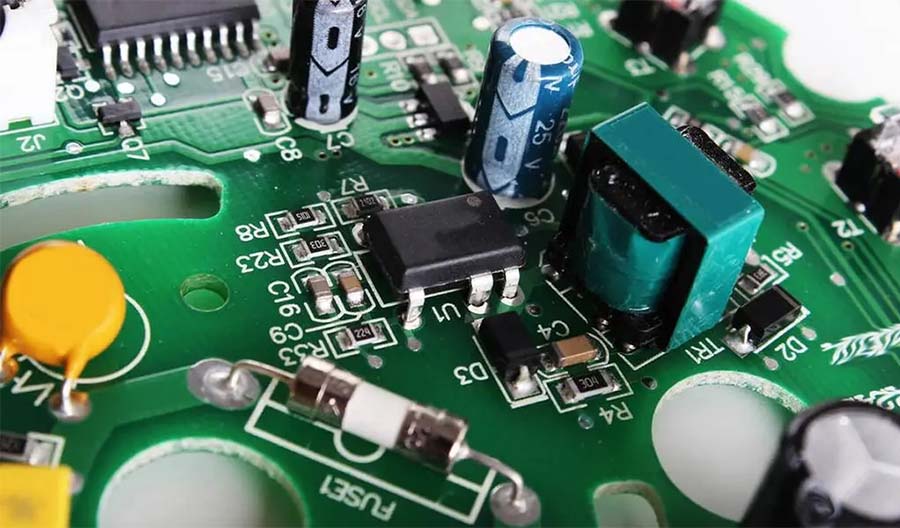
1、Decoding the Five Core Stringent Requirements of Automotive-Grade Manufacturing
The unique demands of NEV PCBA control boards stem from their extreme operating environments and high safety responsibilities. These impose systemic and extraordinary challenges on manufacturers, primarily in the following five dimensions:
Robustness in Extreme Environments
Automotive electronics must endure drastic temperature fluctuations ranging from -80°C to 150°C, vibration environments exceeding 5Grms for over 15 years, as well as high humidity (95% RH) and salt spray corrosion. This necessitates that every detail of the PCBA—from substrates and solders to coatings—be designed for such harsh conditions. For instance, high-TG (≥170°C) FR-4 substrates are essential to resist thermal deformation, special alloy solders such as SAC305 ensure solder joint reliability under thermal cycling, and precise conformal coating (25-75μm) is applied to combat moisture and corrosion.
Dual Requirements of Functional Safety and High Performance
On one hand, control boards must comply with the ISO 26262 functional safety standard, ensuring fail-safe operation through fault diagnostics and redundancy design. On the other hand, to process vast amounts of complex data for autonomous driving perception, precise battery management, and instantaneous motor control, PCBAs must integrate high-performance processors, high-precision sensors (e.g., voltage acquisition chips with ±2mV accuracy in BMS), and high-speed communication interfaces. High integration (e.g., using 10+ layer multi-layer boards) is also imperative to reduce size, lower costs, and enhance reliability.
Micron-Level “Zero-Defect” Manufacturing
As components shrink to 01005 packages (0.4mm × 0.2mm) and BGA pitch narrows to 0.4mm or smaller, manufacturing precision has leaped from millimeter to micron levels. This requires manufacturers to employ advanced SMT equipment capable of ±25μm placement accuracy, utilize 3D SPI (Solder Paste Inspection) to control solder paste thickness variations within ±15μm, and implement in-circuit AOI (Automated Optical Inspection) to detect defects as fine as 15μm. Even minor misalignments or cold joints can pose critical hazards during vehicle operation.
Data-Closed Loop Across the Lifecycle
The automotive industry emphasizes “zero defects” and end-to-end traceability. Manufacturers must establish digital systems based on MES (Manufacturing Execution System) to enable full traceability of process parameters (e.g., reflow soldering temperature profiles with ±1°C accuracy), material batches (strict MSD control), and test data (100% ICT/FCT archiving). Quality control extends beyond production to form a closed loop of “design-manufacturing-testing-field feedback,” leveraging RMA (Return Material Authorization) and failure modeling for continuous process improvement and batch risk control.
Agile Capabilities for Rapid Response and Collaborative R&D
With rapid technological iterations and evolving customer demands in the NEV sector, manufacturers must demonstrate agility—not only ensuring routine deliveries but also compressing R&D-to-mass-production cycles through agile supply chain coordination, concurrent engineering management, and modular design libraries, especially when addressing unexpected bulk orders or urgent design changes. Moreover, proactive DFM (Design for Manufacturability) collaboration helps mitigate potential process and reliability risks during the design phase, reducing costs and enhancing efficiency for customers.
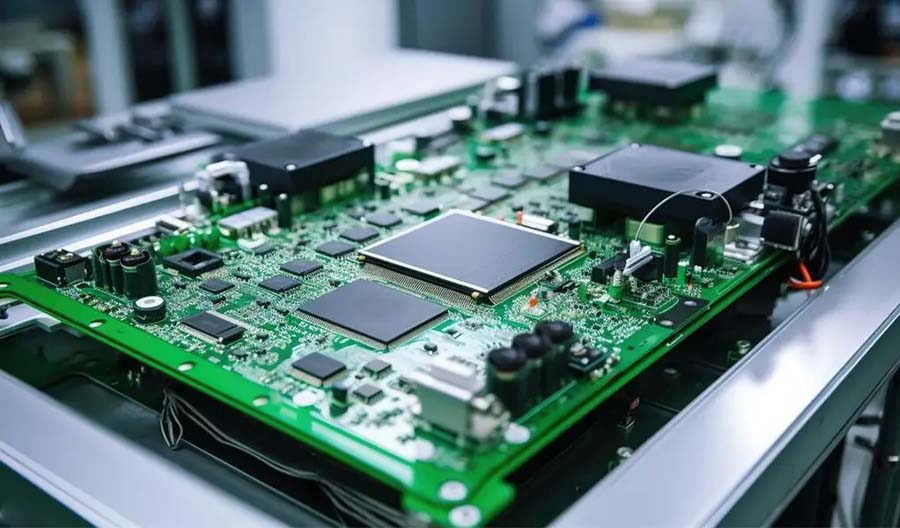
2、Case Studies: Benchmark Practices Reveal the Threshold for Compliance
Through two case studies, specific data reveals the gap between compliant manufacturers and ordinary manufacturers:
Case 1: Achieving “Zero-Defect” Breakthrough in Automotive ECU Mainboards
An automotive electronics supplier developing an ECU (Electronic Control Unit) mainboard for an NEV model faced stringent requirements: 0.2mm-pitch BGA chip integration, an operating temperature range of -40°C to 125°C, and a defect rate below 50 PPM. A qualified manufacturer (e.g., Changlong Electronics in the case) employed Fuji NXT-3 series high-speed, high-precision placers for accurate component placement and implemented 100% X-Ray inspection of hidden solder joints. The outcome was product certification to automotive standards, with the mass production defect rate dropping from the required 50 PPM to 20 PPM, exceeding customer expectations. In contrast, factories lacking equivalent equipment and process control systems may struggle to achieve basic soldering yields.
Case 2: Ensuring “Full-Temperature-Range” Accuracy and Safety in BMS Control Boards
For BMS power board manufacturing, accuracy and safety are paramount. Leading manufacturers (e.g., Pudi Technology) adopt high-precision 16-bit+ ADC chips and precision resistor networks to achieve industry-leading voltage acquisition accuracy of ±2mV and current detection accuracy of ±0.5%. Production strictly follows ISO 26262 processes, with multi-point calibration for each sampling channel to ensure measurement consistency across -40°C to 105°C. Isolation communication circuits withstand insulation voltages above 2500Vrms, and 100% three-temperature testing (low, room, high) coupled with automated safety validation ensure compliance with ASIL-C standards. These data-driven, rigorously tested “moats” are unattainable for ordinary manufacturers.
3、Five Key Dimensions and Weights for Evaluating Manufacturing Service Providers
When evaluating potential suppliers, procurement or partner teams should consider the following five dimensions with suggested weightings:
Certifications and System Compliance (Weight: 20%)
- Core: IATF 16949 automotive quality management system certification is mandatory; ISO 26262 functional safety process capability is a key differentiator for high-level autonomous driving.
- Basic: ISO 9001 quality management, ISO 14001 environmental management, etc.
Technical Process and Equipment Capability (Weight: 25%)
- Critical Processes: Assess expertise in high-precision SMT (for 01005/0.4mm BGA), multi-layer lamination (10+ layers), selective soldering, and conformal coating, along with advanced equipment (e.g., 3D SPI, high-precision placers).
- Material Engineering: Experience with automotive-grade components (AEC-Q certified) and specialty materials (high-TG substrates, high-performance solders).
Quality Control and Traceability (Weight: 25%)
- Process Control: Full-process inspection coverage via micron-level SPI, in-line AOI, and X-Ray; process yield rates meeting automotive standards of ≥99.95%.
- Traceability: Depth of MES implementation enabling bidirectional traceability from materials to process parameters and test data.
Testing Verification and Reliability Assurance (Weight: 20%)
- Testing System: Capabilities in functional testing (FCT), in-circuit testing (ICT), and environmental reliability testing (thermal cycling, vibration, HALT), supported by laboratory resources.
- Data Closed Loop: Mature failure analysis and continuous improvement mechanisms based on test and field feedback.
Service Responsiveness and Collaboration (Weight: 10%)
- R&D Collaboration: DFM analysis, technical support depth, and rapid response mechanisms (e.g., 48-hour prototyping).
- Supply Chain Resilience: Material procurement coordination and stability in large-scale delivery.

4、Value Transformation: From “Processor” to “Reliable Partner”
PCBA control board manufacturing for NEVs is no longer merely about circuit board assembly. It represents a systems engineering feat integrating materials science, precision machinery, automation control, data management, and functional safety principles. Top manufacturers transcend the role of “processors” to become “strategic partners” in product quality, time-to-market, and long-term reliability. By establishing a robust system encompassing extreme-environment design, zero-defect manufacturing, lifecycle data traceability, and rigorous testing, they translate abstract “high reliability” into measurable, controllable, and traceable process parameters and test data, thereby laying a solid physical foundation for the safe operation of NEVs.
5、Embracing the Industry Future with Systemic Capabilities
In the increasingly competitive NEV landscape, the reliability of core components is the cornerstone of automakers’ brand value. Therefore, selecting a PCBA manufacturing partner essentially means choosing a proven, systemic quality assurance capability. Suppliers relying solely on cost advantages, without demonstrable strengths in certifications, processes, control, and testing, will gradually be marginalized in the mainstream supply chain.
The industry’s evolution continues to raise manufacturing standards. In this context, companies like TORTAI Technologies—with their manufacturing base in Shenzhen, expertise in core processes such as SMT, wave soldering, and selective soldering, and stringent quality control from design review (DFM) to precision manufacturing and full-process testing (AOI, X-Ray, functional testing) in compliance with IATF 16949—have become key choices for clients seeking high-reliability PCBA solutions. Their end-to-end services from concept to mass production epitomize the systemic capabilities needed to tackle the complex challenges of the NEV industry. Moving forward, only manufacturers committed to continuous technological innovation, robust quality management, and deep collaboration with customers will thrive alongside the NEV sector on the fast track of sustainable development.