


In the realm of life sciences and healthcare, electronic devices have evolved from supporting tools into core hubs. From portable monitors that continuously track vital signs, to CT scanners that deliver high-precision imaging, and directly into implantable pacemakers—their efficacy and safety all hinge on the internal electronic components and printed circuit board (PCB) assemblies. However, the extreme stringency of medical applications—where human lives are at stake, signals are minuscule, environments are complex, and regulations are rigorous—demands far more from electronic hardware than consumer-grade products. A central contradiction emerges: how to pursue high performance, miniaturization, and intelligence while ensuring absolute safety, reliability, and regulatory compliance? This is not merely a technical challenge; it is a chasm of trust between manufacturers and patients. This article delves into the core characteristics that medical electronic components must meet, focuses on the critical link of PCB assembly, reveals the mandatory certification systems and demanding manufacturing standards behind it, and provides industry peers and equipment purchasers with a clear framework of dimensions and weights to evaluate manufacturing service providers.

Decoding the Five Core Characteristics of Medical Electronic Components
Hardware design for medical electronic products is a systematic engineering task directly impacting patient safety, data accuracy, and operational reliability. The characteristics of these components are not a simple checklist but an integrated whole built upon the cornerstone of “safety.”
1、Safety First: An Absolute Red Line That Cannot Be Crossed
Safety is the core principle and primary characteristic of medical electronic design. It encompasses three levels:
- Electrical Safety:Strict compliance with the IEC 60601-1 series of standards is mandatory, ensuring adequate creepage distances, clearances, and insulation levels. Most critical is the limitation of leakage current, especially patient leakage current, which is typically required to be extremely low (e.g., ≤10 μA for CF-type devices). This is achieved through medical-grade isolated power supplies (e.g., isolated DC-DC modules) and careful circuit design.
- Mechanical and Biological Safety:Devices must prevent sharp edges and corners and possess sufficient mechanical strength and stability. All materials that come into direct or indirect contact with the human body must comply with biocompatibility standards such as ISO 10993, ensuring they are non-toxic, non-allergenic, and non-irritating, and prevent the release of harmful substances. For example, polyimide flexible substrates used in implantable devices must pass cytotoxicity tests, requiring that extracts maintain cell viability ≥80%.
- Electromagnetic Compatibility (EMC) Safety:Devices must neither generate excessive electromagnetic disturbances that could interfere with other sensitive equipment (e.g., other instruments in an operating room) nor be susceptible to interference, maintaining stable operation in complex electromagnetic environments. This requires source-level design from component selection, PCB layout and routing, filtering, to shielding.
2、High Precision and High Consistency: The Foundation of Diagnosis and Treatment
Medical electronics process life-critical physiological signals, where any deviation can lead to misdiagnosis or mistreatment. Therefore, output precision and consistency are fundamental characteristics that distinguish medical from consumer electronics.
- Signal Acquisition Precision:Biosignals (e.g., ECG, EEG) are extremely weak, demanding front-end circuits with high precision, low noise, and high common-mode rejection ratio (CMRR). For instance, temperature and blood oxygen sensors used for continuous monitoring require analog front-end power consumption as low as microamps (e.g., 1 μA), while maintaining a sufficiently high sampling rate (≥100 Hz) to capture subtle changes.
- Data Consistency:Measurements taken by the same device at different times, or performance across different batches of devices, must remain highly consistent. This depends on high-precision, low-temperature-drift components (e.g., clock chips with daily drift <1 ppm) and highly consistent manufacturing processes.
3、Ultra-High Reliability: Withstanding Extreme Environments
Medical devices, especially implantable or life-support equipment, must operate reliably over long periods under various harsh conditions. This demands industrial-grade or even higher reliability from components.
- Environmental Robustness:Must meet requirements for wide temperature and humidity ranges, vibration, shock, and drops. Components must pass stringent reliability tests, such as 1000 hours of high-temperature aging and 500 temperature cycles, to ensure performance under extreme conditions.
- Long-Life Design:Medical products have long lifecycles, often with warranties exceeding five years, and large equipment may require traceability records for ten years or more. This means components need long lifecycles, and PCBs must exhibit high durability (e.g., industrial-grade memory chips with ≥100,000 erase/write cycles).
4、Low Power and High Efficiency: The Power Source for Portability and Implantability
As medical devices trend toward portability, home use, and implantability, low power consumption becomes a critical characteristic. Battery-powered devices require chips that operate at very low voltages and feature efficient sleep and wake-up mechanisms to extend battery life. For example, wireless transmission modules (e.g., BLE 5.0) must tightly control power consumption while enabling real-time data transmission (latency <50 ms).
5、Full Traceability: The Lifetime Archive of Quality Accountability
The medical field imposes nearly stringent requirements for traceability. This goes beyond product serial numbers; it demands complete data recording from raw material and component batches to every manufacturing process parameter. The traceability period must match the device’s useful life (typically 5–10 years or more). This is a core requirement of the ISO 13485 quality management system and a mandatory provision of regulations like FDA QSR 820, aiming for closed-loop risk management and rapid recall.
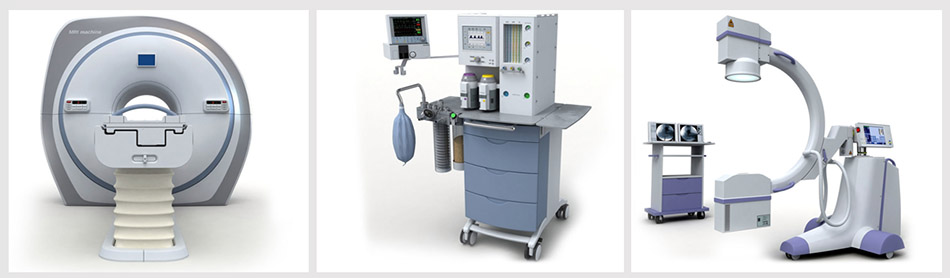
Case (Data): The Demanding Requirements of Medical Applications as Seen Through PCB Types
Different types of medical devices impose distinct, extreme requirements on PCBs, quantified through specific technical parameters and examples.
| Device Type | Core Demand | Corresponding PCB Type & Key Parameters | Performance Data & Case Study |
| Implantable Devices (e.g., pacemakers, cochlear implants) |
Ultra-high reliability, biocompatibility, miniaturization, long life | Flexible PCB / Rigid-Flex PCB / HDI PCB • Material: Bio-inert Polyimide (PI) • Surface Finish: Hard Gold (thickness ≥30μm) • Line Width/Spacing: Extremely fine (e.g., 3mil) • Testing: Dynamic Flex (resistance change ≤10% after 10k cycles) |
• Signal Delay: Requires <1ns; parasitic capacitance >0.1pF may pose arrhythmia risk. • Biocompatibility Test: Material extract must show cell viability ≥80%. • Lifetime: Gold plating must withstand 10,000 mating cycles (contact resistance change ≤20mΩ). |
| Portable Monitoring Devices (e.g., glucose meters, portable monitors) |
Low noise, high precision, biocompatibility, small size | Double-sided/Multilayer PCB, HDI PCB • Substrate: Medical-grade halogen-free FR-4 • Signal Lines: Wide traces, short-path design • Cleanliness: Ultrasonic + plasma cleaning (residue ≤5μg/cm²) |
• Noise Control: Optimized signal noise can drop from 30μV to 8μV. • Diagnostic Accuracy: Glucometer error can be reduced from out-of-spec to ≤2%.<br>• Biocompatibility: Skin irritation index reduced from 1.2 (non-compliant) to 0.3. |
| Large Diagnostic Equipment (e.g., MRI, CT) |
High-speed signal integrity, high heat dissipation, high stability | Multilayer PCB, High-Frequency PCB, Heavy Copper PCB, Metal-Core Substrate • Material: High-frequency specialty or ceramic-filled substrate • Copper Weight: May use 2OZ+ heavy copper for even heat dissipation • Layer-to-Layer Registration: Deviation ≤25μm |
• Sampling Accuracy: ADC sampling error需 ≤±0.5LSB; ground noise >50μV can increase CT image artifact rate by 12%. • Signal Quality: X-ray detectors require Signal-to-Noise Ratio (SNR) ≥60dB. |
| Life Support/Monitoring Equipment (e.g., ventilators, patient monitors) |
Absolute reliability, real-time performance, interference immunity, ease of interaction | High-Reliability Multilayer PCB • Standard: Must meet IPC-A-610 Class 3 (highest reliability grade). • Display Drive: Supports high brightness (≥1000 nits) for strong light environments. • Touch Response: <50ms to prevent false triggers. |
• Environmental Testing: Must pass 1000-hour aging at 85°C/85% RH, dielectric constant change rate ≤3%. • Timing Synchronization: Multi-device time sync relies on clock chips with daily drift <1ppm. |
A Solution Framework: Four Dimensions for Evaluating Medical PCB Manufacturing Service Providers
Selecting the right contract manufacturer (CM) is critical to the successful market entry of a medical device. We propose a four-dimensional weighted model to systematically assess service providers.
1、Certification System & Regulatory Compliance Capability (Weight: 35%) – The “Entry Ticket” and “Letter of Trust”
- Quality Management System:Does the provider hold ISO 13485 certification—the most core QMS standard for medical devices, emphasizing risk management and process traceability? For manufacturers targeting the US market, compliance with FDA QSR 820 (21 CFR Part 820) is equally crucial.
- Product & Safety Certifications:Does the provider have experience and capability in assisting with CE (compliant with MDR), FDA 510(k), or PMA certification? Does the factory’s production environment and processes meet the requirements of IEC 60601-1 (electrical safety) and IEC 60601-1-2 (EMC)?
- Material Certification Knowledge:Is the provider familiar with ISO 10993 (biocompatibility), RoHS, REACH, and other material safety regulations, and can they provide compliant material selection options?
2、Process Technology & Engineering Capability (Weight: 30%) – Demonstration of “Hard Power”
- Precision Manufacturing Capability:Can the provider achieve line width control accuracy of ±5 μm, layer-to-layer registration deviation ≤25 μm, and 100% X-ray inspection (resolution ≤5 μm) for defects like voids? For implantable or wearable devices, do they have mature processes and reliability verification (e.g., thousands of flex cycles) for rigid-flex and HDI boards?
- Signal Integrity Management:Does the provider have specialized processes for medical low-noise requirements, such as single-point analog/digital ground connection, line edge roughness control (Ra ≤0.05 μm), and stringent cleaning processes (ensuring extremely low ionic residue)?
- Special Processes:Does the provider support medical-grade conformal coating application, high-power thermal dissipation design, and processes meeting high-voltage isolation requirements?
3、Traceability & Quality Management Depth (Weight: 25%) – Assurance of “Soft Power”
- End-to-End Traceability System:Has the provider established a MES (Manufacturing Execution System) database that records data from raw material batches (laminate, ink) to each process parameter (etching temperature, time) to the final unique product code, enabling minute-level historical data retrieval?
- Documentation Control:Are design documents, BOMs, risk analysis reports, test reports, etc., comprehensive and controlled? Is the change control process rigorous?
- Supplier Management:Does the provider strictly screen and manage the lifecycle of key component suppliers to ensure long-term, stable material supply?
4、Collaborative Experience & Domain Knowledge (Weight: 10%) – Catalyst for “Cost Reduction & Efficiency”
- Medical Industry Experience:Does the provider have successful mass production cases of similar products (e.g., patient monitors, diagnostic equipment, implantable devices)?
- Engineering Support Capability:Can the provider engage early in the design phase (DFM) to offer optimization suggestions regarding manufacturability, testability, and compliance, avoiding major late-stage revisions?
- Regulatory Pre-Review Service:Can the provider offer pre-review services for target market regulations to mitigate certification risks upfront?

Conclusion
The world of medical electronic components and PCB assembly is defined by a dense framework of regulations, towering peaks of technical performance, and a safety baseline forged from accountability. The required characteristics are not a simple sum of functions but a systematic engineering effort centered on “safety, precision, reliability, and traceability.” Using the four-dimensional weighted model above (Compliance 35%, Process Tech 30%, Traceability 25%, Collaboration 10%), equipment manufacturers can see through marketing rhetoric and accurately identify partners with true “medical-grade” manufacturing capability.
An excellent medical electronics manufacturing service provider is inevitably a master integrator of the above capabilities. For example, a company like Tortai Technologies, with deep roots in the industry, delivers value not only through a full suite of certifications including ISO 13485 and medical device manufacturing compliance, but also by embedding regulatory awareness into every cell, from design review to final shipment. Its Class 3 IPC standard execution, specialized low-noise process lines for weak signal handling, and MES-based fully digital traceability platform form a solid triangular support to meet the difficult challenges of medical manufacturing. More importantly, its engineering team, possessing profound understanding of standards like IEC 60601 and FDA QSR, collaborates with clients upfront to “design in” compliance and reliability rather than “testing them out,” fundamentally shortening time-to-market and reducing long-term risks. This integrated capability of “system assurance, technology-driven, and end-to-end collaboration” is the key to ensuring that medical electronic components reliably transform from drawings into life-protecting products.