


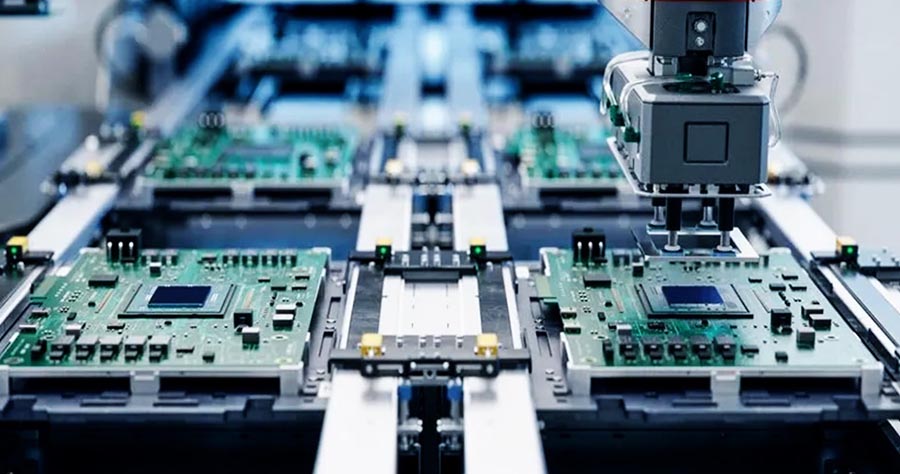
In the production workshop of PCBA processing, most companies focus their efforts on the precision of placement machines, the temperature zones of reflow ovens, and the algorithms of AOI. When faced with batch issues of cold solder joints, tombstoning, or solder balls, many manufacturers’ first reaction is to adjust the oven temperature profile, often overlooking the hygrothermograph hanging on the wall. In reality, subtle fluctuations in the workshop environment are the invisible culprits leading to loss of control in PCBA soldering quality.
1、Humidity loss of control: Performance Degradation of Materials and Solder Paste
Humidity is the most active variable affecting PCBA processing quality. When the ambient relative humidity exceeds 70% RH, PCB pads and component leads accelerate their absorption of moisture from the air, triggering oxidation at a microscopic level.
Excessive humidity is particularly damaging to solder paste. The flux within solder paste is highly hygroscopic. Once it absorbs excessive moisture, during the high-temperature stage of reflow soldering, the violent volatilization of water vapor causes splattering, forming a large number of random solder balls. More severely, moisture dilutes the active components of the flux, preventing it from effectively removing the oxide layer at the critical moment of soldering, directly inducing cold solder joints or poor wetting. Conversely, if humidity falls below 30-40% RH, static electricity easily accumulates in the workshop, not only threatening the safety of sensitive chips but also causing the solvent in the solder paste to evaporate faster, leading to viscosity imbalance and resulting in printing defects like solder paste slumping or skipping.
2、Temperature Fluctuations: The Chain Reaction of Viscosity and Rheology
The standard working environment for PCBA factories is typically set between 22°C and 28°C. This is not merely for employee comfort but is based on considerations of fluid dynamics.
Solder paste is a heat-sensitive non-Newtonian fluid. When the workshop temperature rises, the viscosity of the solder paste decreases significantly. During the printing process, excessively low viscosity can cause the solder paste to slump after stencil release, leading to bridging and short circuits between adjacent pads. If the temperature is too low, the solder paste becomes abnormally viscous, unable to smoothly fill the stencil apertures, resulting in insufficient solder or skip printing defects. Furthermore, unstable ambient temperature causes the baseline temperature of the reflow oven’s preheat zone to shift, rendering the originally precise temperature profile meaningless as a reference and increasing the brittleness of the solder interface.
3、The “Popcorn Effect” in Moisture-Sensitive Devices (MSDs)
In the assembly of high-performance PCBA for medical or automotive applications, the management of Moisture-Sensitive Devices (MSDs) is paramount. If workshop humidity control fails, the lead frame inside IC packages can absorb trace amounts of moisture. Under the high-temperature impact of reflow soldering above 240°C, this moisture rapidly expands, generating enough pressure to lift the package lid, causing micro-cracks or internal delamination—known in the industry as the “popcorn effect”. This type of damage is often hidden. The device may test normally during the factory phase, but after months of operation, due to moisture erosion or stress propagation, it can lead to complete device failure.
4、Dynamic Monitoring: Establishing a Digital Foundation for Environmental Protection
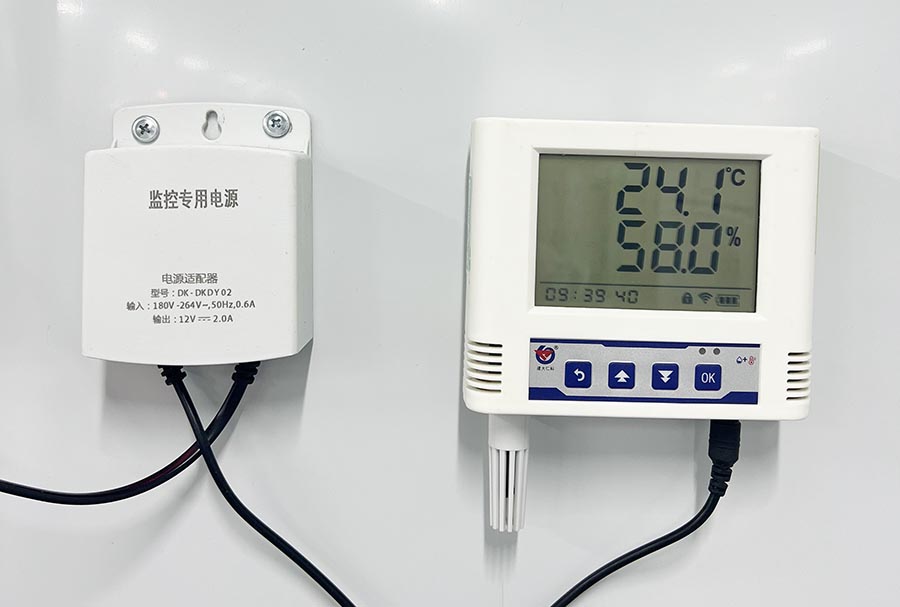
Mature manufacturers do not rely on manual recording of temperature and humidity. Instead, they establish round-the-clock automated monitoring systems through sensors. Multiple data collection points are deployed along the production line, uploading data in real-time to the MES system. Once temperature or humidity deviates from the preset window, the system automatically sends alerts to the process engineering team and can even link with the central air conditioning system for intervention. For PCBs and MSDs, electronic dry cabinets must be equipped, and strict adherence to the floor life countdown after package opening is mandatory. Only by transforming environmental factors into quantifiable process parameters can it be ensured that every PCBA is assembled under identical physical conditions.
The root cause of soldering defects often lies not in obvious equipment failures, but in the overlooked atmospheric environment. If you are experiencing violent fluctuations in product yield, frequent unexplained cold solder joints, or high post-sales repair rates, it may indicate vulnerabilities in your workshop environmental control. TORTAI operates constant temperature and humidity production workshops and has established a stringent environmental risk early warning system tailored for different product models. Contact us to explore how we can help you enhance the process reliability of your PCBA processing.