


In the quality management system of PCBA (Printed Circuit Board Assembly) processing, IQC (Incoming Quality Control) acts as the gatekeeper for the entire production line. If raw materials possess defects at the storage stage, no matter how precise the subsequent SMT placement, reflow soldering, or functional testing are, they cannot salvage the quality loss of the final product. For PCBA manufacturing pursuing high reliability, IQC is far from a simple task of checking quantities and specifications; it is a rigorous screening process based on engineering logic. With years of experience in the industry, I have summarized five critical metrics that measure the professionalism of IQC and the qualification of materials. These details directly determine the first-pass yield in PCBA processing.
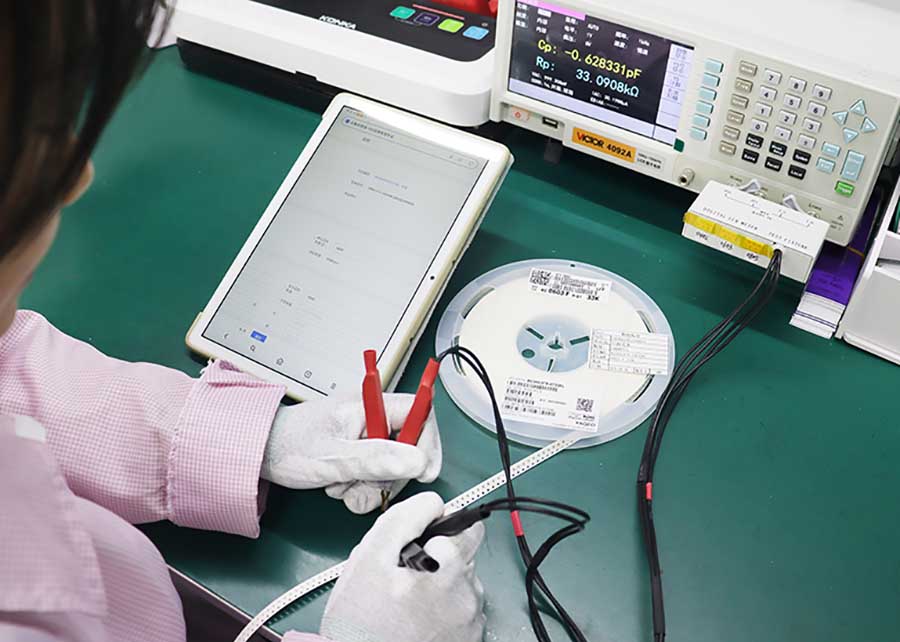
1、Solderability Verification of Pads and Component Leads
Solderability is the most fundamental yet critical metric in PCBA processing. Oxidation on PCB pad or component lead surfaces can lead to poor wetting, cold solder joints, or voids during reflow soldering.
IQC must periodically conduct tests such as the Edge Dip Test. For components or PCBs stored for over six months, it is necessary to simulate the actual soldering environment to observe the wetting angle and coverage area of solder on the metal surface. If the wetting angle exceeds 90 degrees or irregular solder dewetting occurs, it indicates degradation of the plating layer. Such materials must be strictly prohibited from entering the SMT process; otherwise, they can lead to widespread batch rework. Professional solderability assessment methods also include wetting balance tests and solder ball tests for quantitative analysis.
2、Dimensional Accuracy and Coplanarity Inspection
As packaging trends toward miniaturization (e.g., 01005 or ultra-fine-pitch BGA), minute physical dimensional deviations can cause severe process failures. For PCBs, IQC needs to focus on inspecting board thickness, hole diameter tolerance, and silkscreen clarity. For components, especially multi-pin ICs or connectors, lead coplanarity is paramount.
If the coplanarity error of leads exceeds 0.1mm, it can easily result in tombstoning or non-wet opens after placement. Typically, IQC is required to use high-magnification Automated Optical Inspection (AOI) equipment or digital microscopes to sample high-risk materials, ensuring their mechanical dimensions fully comply with the original design specifications.
3、Compliance of Packaging with MSL (Moisture Sensitivity Level) and ESD Protection
In PCBA production, inadequate management of Moisture-Sensitive Devices (MSDs) is a primary cause of the “popcorn effect”. The moment IQC unpacks materials, they must check for damage to the Moisture Barrier Bag (MBB), whether the desiccant is inactive, and the color of the Humidity Indicator Card (HIC).
Simultaneously, the electrostatic discharge (ESD) protection performance of the packaging is also a mandatory metric. If suppliers use inferior ordinary plastic bags, static electricity accumulated during transportation friction can be sufficient to damage the intricate circuits inside chips. IQC needs to be equipped with surface resistance testers to regularly sample and test the conductivity of packaging materials, preventing electrostatic damage at the source.
4、Adhesion Testing of PCB Solder Mask and Gold Fingers
The quality of PCB substrates depends not only on the traces but also on surface finish. Under the high-temperature environment of PCBA processing, inferior solder mask ink can peel off or turn white.
IQC needs to perform a Cross-cut Test (also known as the Tape Test). This involves using standard tape to conduct a peel test on the solder mask and gold finger surfaces. If the tape removes the ink or gold plating upon peeling, it indicates process defects in PCB fabrication. If such issues are discovered only after components are soldered, it not only results in the loss of expensive materials but also leads to PCB scrap, causing severe setbacks to project timelines.
5、Material Consistency and Authenticity Verification (Golden Sample Comparison)
Amidst fluctuations in the global supply chain, the risks associated with refurbished and counterfeit components have surged. A crucial task for IQC is to verify material consistency.
This involves comparing received samples with golden samples, checking markings font, logo craftsmanship, features of the lead frame, and pin coloration. For critical core chips, it is also necessary to employ X-ray inspection to verify the consistency of internal wire bonding structures. Only by ensuring that every component entering the production line is a genuine original factory part can reliability be assured.
The depth of IQC determines the breadth of PCBA processing capabilities. These five metrics may seem tedious, but they are, in fact, the most effective means to reduce production risks and save communication costs. If your project is experiencing unexplained soldering defects, or if the quality of raw materials provided by suppliers is inconsistent, feel free to contact Tortai Technologies for tailored PCBA quality enhancement advice, stopping risks at the receiving dock.