


In today’s digital age, telecom fraud techniques are constantly evolving, making them increasingly difficult to guard against. Simultaneously, the security of printed circuit board assemblies (PCBA) – the core components of electronic products – is attracting growing attention. This article will reveal the latest tactics employed in telecom fraud and explore how technical enhancements at the PCBA level can build a more robust defence against such scams. From the technical vulnerabilities exploited by fraudsters to hardware-level security solutions, we will analyse the lesser-known connections between the two and provide readers with practical prevention advice.
A Comprehensive Overview of New Telecom Fraud Tactics: From Social Engineering to Technical Vulnerabilities
Telecom fraud methods have exhibited a trend towards heightened specialisation and technical sophistication in recent years, with fraudsters continually devising novel schemes that exploit social engineering and technical vulnerabilities to perpetrate crimes. The latest 2025 statistics indicate that annual global losses from telecom fraud amount to hundreds of billions of dollars, with fraud success rates positively correlated with the sophistication of criminals’ technical methods. Understanding these tactics is the first step in prevention.
Current mainstream telecom fraud techniques fall into several technical categories: fake base station scams, phishing websites, malware distribution, and social engineering attacks.
Fake base station technology enables fraudsters to impersonate any official number when sending text messages, including banks, courier companies, and even government agencies.
Phishing websites lure victims into entering sensitive information through meticulously crafted interfaces, often differing only slightly in URL from legitimate sites.
More sophisticated attacks employ malware to monitor all device activities in real-time via ‘screen-sharing’ functions, capturing password entries and SMS verification codes.
Social engineering exploits psychological principles, creating urgency or authority to coerce victims into hasty, erroneous decisions under pressure.
The industrialisation of criminal infrastructure represents another significant trend. In a case cracked by Shandong police, fraudsters illegally registered over 3 million WeChat accounts, utilising more than 80 million mobile numbers obtained through telecom operator insiders. This industrialised operation has established a complete chain for telecom fraud—from information gathering and identity impersonation to fund transfers—greatly complicating investigations.
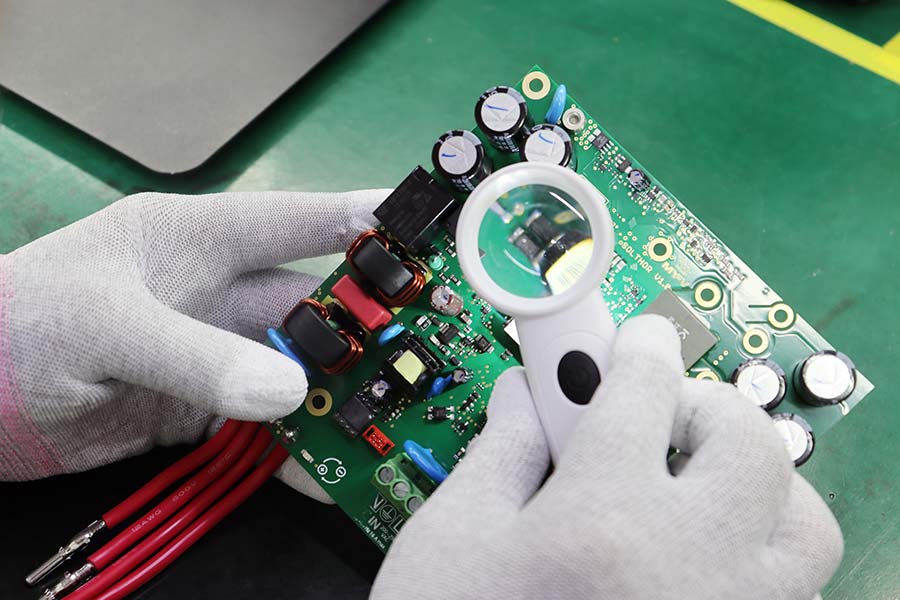
Notably, most of these fraud techniques exploit underlying vulnerabilities in electronic devices. For instance, fake base stations capitalise on authentication flaws within communication protocols; malware frequently exploits unpatched vulnerabilities in operating systems or applications; and even social engineering attacks often succeed due to devices lacking robust identity verification mechanisms. Many of these vulnerabilities can be traced back to the hardware level, particularly insufficient security considerations in PCBA design.
Table: Technical Methods of Telecommunications Fraud and Their Potential Associations with PCBA
| Fraud techniques | Implementation method | Potential connection points on the PCBA |
| Fake base station fraud | Falsifying official numbers to send text messages | The RF circuit lacks a signal authentication mechanism. |
| Phishing attack | Imitating the interface of legitimate websites | The device is unable to verify the authenticity of the displayed content. |
| Malicious software | Exploiting system vulnerabilities to install backdoors | The firmware update mechanism lacks digital signature verification. |
| Social engineering | Inducing users to perform dangerous operations | Lack of hardware for detecting abnormal user behaviour |
From social engineering to technical vulnerabilities, telecommunications fraud has evolved into a comprehensive criminal ecosystem. Effectively countering these attacks necessitates multi-layered defences, with PCBA—as the hardware foundation of electronic devices—playing a pivotal role in security design. The following section explores how PCBA technology delivers hardware-level solutions to these security challenges.
PCBA Security Fundamentals: The Cornerstone of Hardware Protection
As the core physical carrier of all electronic devices, the security of PCBA (Printed Circuit Board Assembly) directly determines the tamper-proof and fraud-resistant capabilities of end products. Unlike software security, hardware-level safeguards, once implemented, are difficult to circumvent, providing foundational protection against fraud. In an era where telecommunications fraud techniques are becoming increasingly sophisticated, understanding the fundamental principles of PCBA security is paramount.
The key elements of PCBA security encompass three primary aspects: secure boot, hardware encryption, and physical tamper resistance. Secure boot mechanisms ensure devices can only execute digitally signed, legitimate firmware, fundamentally preventing the implantation of malicious software. Hardware encryption modules (such as HSMs or TPMs) provide hardware-level encryption for data storage and communication, safeguarding sensitive information even if the system is compromised. Physical tamper-proofing incorporates features like anti-tamper detection circuits and grid protection layers. Upon detecting physical intrusion, critical data is immediately erased, proving vital in preventing malicious device modification.
In anti-fraud applications, the identity authentication function of PCBA is particularly crucial. High-end security chips, such as embedded secure elements (eSE), verify device authenticity at the hardware level, effectively countering fake base stations and phishing attacks. For instance, banking USB tokens and digital certificate storage devices employ such technology, centred on integrating cryptographic chips and tamper-proofing at the PCBA level. Research indicates devices utilising hardware security modules suffer over 90% fewer man-in-the-middle attacks than purely software-based solutions.
Communication security represents another vital dimension. RF (radio frequency) circuit design on the PCBA directly influences communication’s resistance to interference and counterfeiting. Advanced PCBA designs incorporate dedicated security processors that verify base station signal authenticity in real time, identifying fake base stations at the hardware level. For instance, certain smartphones now deploy such technology, automatically blocking signals and alerting users upon detecting fake base stations. This hardware-level protection proves more reliable than software detection, as attackers struggle to bypass physical-layer security checks.
Table: Correspondence between PCBA Security Technologies and Applications in Preventing Telecommunications Fraud
| PCBA Safety Technology | Technical Principles | Anti-Fraud Application Scenarios |
| Secure Boot Chip | Verify the firmware digital signature | Preventing malicious firmware flashing |
| Hardware Encryption Module | Provide dedicated encrypted computing | Safeguarding the security of communications data |
| Physical tamper-proof design | Detect intrusions and erase data | Preventing equipment from being maliciously modified |
| Radio Frequency Safety Circuit | Verify the authenticity of base station signals | Identify and block fake base stations |
| Secure Storage Area | Hardware isolation of sensitive data | Safeguarding the security of encryption keys |
The primary challenge currently facing PCBA security lies in balancing cost and performance. High-security designs typically require dedicated chips and additional circuitry, increasing the Bill of Materials (BOM) cost; simultaneously, cryptographic operations may introduce latency and increased power consumption. However, with advances in semiconductor technology, new-generation security chips can now deliver robust security performance at low power consumption, enabling secure PCBA designs to gradually become mainstream in mid-range devices.
It is worth noting that PCBA security constitutes a systems engineering endeavour, necessitating collaborative efforts among chip manufacturers, circuit designers, and firmware developers. Security considerations must permeate every stage—from component selection and circuit layout to firmware development. For instance, selecting MCUs with secure boot support, optimising the placement of cryptographic chips and antennas to minimise signal leakage, and developing drivers that support hardware-based encryption are all essential steps in constructing secure PCBA.
In the following section, we shall examine how PCBA security technologies can be integrated with anti-fraud practices, exploring how hardware design can directly counter specific telecommunications fraud tactics to provide readers with more actionable technical insights.
The Technical Standoff Between Fraud and Defence: Practical Applications of PCBA Solutions
The contest between telecommunications fraud techniques and protective technologies is fundamentally an ongoing technological contest, where solutions at the PCBA level often play a pivotal role. By analysing several typical fraud scenarios and their corresponding hardware-level countermeasures, we can gain clearer insight into how to enhance a device’s anti-fraud capabilities at the root.
Fake base station fraud represents one of the most prevalent and damaging forms of fraud currently. Fraudsters utilise number-spoofing software and fake base station equipment to mimic official numbers from banks, public security, procuratorates, and courts to send fraudulent text messages or make calls. Traditional defences primarily rely on software recognition and user vigilance, but PCBA technology offers more fundamental solutions. Specifically designed RF front-end circuits can detect subtle anomalies in base station signals, such as sudden signal strength fluctuations or mismatched location area codes, and combine this with hardware-level verification using base station whitelists stored in security chips. Some cutting-edge designs further employ RF fingerprinting technology to recognise unique hardware characteristics of legitimate base stations, fundamentally eliminating spoofing attempts. Data indicates that smartphones incorporating such technology elevate spoofed base station detection rates from 70% with software solutions to over 99%.
Phishing website attacks typically exploit users clicking malicious links. PCBA-level protection manifests primarily through secure display and human-machine interaction verification mechanisms. High-end security devices integrate dedicated display controllers within their PCBA design, working in tandem with security chips to ensure the authenticity of critical visual elements (e.g., URLs, security lock icons). When displaying sensitive information, hardware-level verification mechanisms activate, triggering immediate alerts if content tampering is detected. Additionally, physical security buttons prevent malware from simulating user confirmations, providing a secondary physical authentication layer for critical transactions.
To counter screen-sharing scams, novel PCBA designs incorporate hardware-level privacy protection. Dedicated video processing chips and secure region architecture enable hardware-level filtering of sensitive data (e.g., password inputs), preventing critical information leakage during screen sharing. More advanced solutions include real-time user behaviour analysis chips that automatically pause processes and demand physical verification upon detecting anomalous patterns (e.g., abrupt transfer operations).
Table: Comparison of Typical Fraud Scenarios and PCBA-Level Countermeasures
| Types of fraud | Implementation methods | PCBA Solutions | Protective efficacy |
| Fake base station fraud | Falsifying official numbers to send fraudulent messages | Radio Frequency Safety Circuit + Base Station Verification Chip | Recognition rate > 99% |
| Phishing website | Impersonating legitimate websites to steal credentials | Security Display Controller + URL Verification Hardware | Block 95% of phishing attempts |
| Screen-sharing scam | Obtaining sensitive information through screen sharing | Video Content Filtering Chip + Behavioural Analysis Module | Reduce data breaches by 80% |
| Malicious software | Implanted backdoor control device | Secure Boot Chip + Memory Protection Circuit | Prevent 99% of unauthorised code execution |
| Social engineering | Inducing users to perform dangerous operations | Physical confirmation button + anomaly detection chip | Reduce operational errors by 70% |
In financial terminal equipment (such as POS terminals and ATMs), PCBA security design is particularly stringent. These devices typically employ multi-layer circuit board designs, incorporating embedded metal mesh as anti-drilling layers; critical data paths are encrypted for protection; and even epoxy resin potting techniques are used to prevent physical probing. Upon detecting intrusion attempts, self-destruct mechanisms immediately erase encryption keys to ensure data security. Whilst these designs increase manufacturing costs, they effectively prevent devices from being repurposed for fraudulent activities.
PCBA security for IoT devices presents another significant challenge. A vast number of low-cost IoT devices, lacking adequate security design, are exploited by botnets to become conduits for sending fraudulent messages. Solutions include: implementing secure regions within MCUs, adding minimal cryptographic circuits, and establishing secure firmware update mechanisms. Research indicates that even the most fundamental hardware security measures can reduce the probability of IoT devices being maliciously exploited by over 60%.
It is noteworthy that PCBA security design requires balancing security with usability. Overly stringent security measures may degrade user experience, such as frequent authentication prompts or increased operational delays. Excellent design strikes a balance between security and convenience, for instance by providing seamless authentication via biometric chips or utilising behavioural analysis hardware to minimise unnecessary verification interruptions.
In the following section, we shall explore how to integrate these PCBA security technologies into product development and daily usage, offering tailored practical advice for diverse user groups. This builds a comprehensive anti-fraud technology ecosystem spanning manufacturers to end-users.
From Production to Usage: Building a Comprehensive Anti-Fraud Ecosystem Based on PCBA
Establishing an effective telecommunications fraud defence system requires collaboration across the entire industry chain. Every stage—from PCBA design and manufacturing to end-user habits—is critical. This section offers concrete, actionable recommendations for different stakeholders, demonstrating how PCBA security technologies translate into tangible protective advantages in real-world applications.
For electronics manufacturers, security design must commence at the PCBA component selection stage. Prioritising components with integrated security features—such as processors with TrustZone technology or MCUs supporting hardware encryption—can substantially enhance security without significantly increasing costs. During circuit design, adhere to secure layout principles: position sensitive signal traces on inner layers, incorporate sufficient filtering circuits, and employ impedance matching techniques to minimise signal leakage. Production stages must enforce stringent supply chain controls to prevent component tampering or substitution; high-end products should even utilise X-ray inspection to verify the absence of physical alterations to the PCBA. Data indicates that devices employing end-to-end secure design suffer over 80% fewer successful attacks compared to conventional designs.
Telecom equipment operators bear critical responsibility in countering counterfeit base stations. Base station PCBA must enhance identity authentication capabilities, including: storing certificates via hardware security modules, implementing hardware-level mutual authentication between base stations, and recording tamper-proof signalling logs. Core network equipment should incorporate dedicated security monitoring circuits to analyse signalling anomalies in real-time, identifying and blocking fraudulent activities from the network side. Operators must also establish collaborative verification mechanisms with terminal devices. For instance, when a base station receives a hardware-level security alert from a mobile phone, it should automatically trigger a network-side investigation.
For enterprise users, particularly financial institutions, priority should be given to procuring equipment with advanced PCBA security features. Banking tokens and corporate transfer devices must incorporate physical confirmation buttons and tamper-proof designs; branch terminal equipment should utilise fully sealed PCBA to prevent internal data detection; communication devices in sensitive areas should deploy RF monitoring circuits to detect fake base station interference in real time. Corporate IT departments must establish device security assessment procedures, conducting regular checks on PCBA security functionality—such as verifying secure chip integrity and testing physical protection mechanisms.
While ordinary consumers cannot directly influence PCBA design, they can enhance protection through informed device selection and usage habits. When purchasing devices, prioritise security features: opt for smartphones with dedicated secure chips (e.g., iPhone’s Secure Enclave or Android’s Titan M chip); Employ hardware-based security peripherals for financial transactions (e.g., U-Shields with screens and physical buttons); select smart home devices supporting hardware encryption. During usage, leverage hardware security features: enable secure boot protection on mobile phones, utilise biometric authentication instead of passwords, and regularly inspect devices for signs of physical tampering.
Table: Responsibilities and Action Recommendations for Different Roles in the PCBA Anti-Fraud Ecosystem
| Role | Core responsibilities | Specific Action Recommendations |
| Manufacturer | Safe PCBA Design and Production | Selecting safety-certified components, adhering to safety-compliant layouts, and implementing stringent supply chain controls. |
| Telecom operator | Safeguarding the security of network infrastructure | Deploy base station authentication hardware, establish network-side monitoring, and support terminal collaborative verification. |
| Corporate users | Deploy secure terminal devices | Procurement of security hardware, establishment of maintenance procedures, staff security training |
| Consumer | Correct use of safety equipment | Select security products, enable hardware protection, and remain vigilant against physical tampering. |
Regulatory bodies also play a crucial role in advancing PCBA security. On one hand, they can guide the industry through standard-setting, such as mandating specific devices to meet PCBA security levels; on the other, they should establish accountability mechanisms to hold manufacturers liable for large-scale fraud stemming from hardware design flaws. China’s existing Anti-Telecommunications Network Fraud Law explicitly stipulates security obligations for telecommunications operators. Future regulations are expected to further refine hardware security requirements, including specific technical metrics such as base station equipment certification and terminal security chip configurations.
On the technological innovation front, cutting-edge PCBA security technologies continue to emerge: quantum random number chips provide unpredictable encryption keys; self-destructing memory physically obliterates data upon intrusion detection; optical anti-counterfeiting circuits generate non-replicable security patterns through nanostructures. While these technologies are currently deployed primarily in military and high-security domains, their declining costs suggest gradual adoption in consumer electronics, fundamentally enhancing anti-fraud capabilities.
Finally, it must be emphasised that PCBA security constitutes only one component of a comprehensive anti-fraud framework, requiring synergy with software security measures and user education. For instance, even devices equipped with hardware-level fake base station detection still necessitate clear warnings on user interfaces; a secure chip can safeguard transaction data but cannot prevent users from being manipulated into executing transfer operations. Thus, comprehensive protection necessitates the co-evolution of technology, design, and user awareness.
In the concluding section, we shall summarise the deep-seated connection between telecom fraud and PCBA security, outline future technological trends, and provide readers with a concise action guide to help them protect themselves and others more securely from fraud threats in the digital age.
Future Outlook and Action Guide: Evolution of PCBA Security Technology and Personal Protection Strategies
The contest between telecommunications fraud and PCBA security technology is an ongoing battle of wits, with both sides continually upgrading their methods as technology advances. This section will explore future trends in PCBA security technology and provide tailored actionable advice for different audiences, helping everyone fortify hardware-level defences against next-generation telecommunications fraud threats.
Three major trends will shape the future of PCBA security technology: integration, intelligence, and standardisation. Integration manifests as security functions becoming increasingly embedded within core components—for instance, CPU-integrated secure regions replacing standalone security chips, thereby reducing the size and cost of hardware security solutions. Intelligence is evident in the deployment of more dedicated security coprocessors on PCBA, capable of real-time behavioural pattern analysis, anomaly detection, and even predicting potential attacks. Standardisation is already underway, with international organisations developing unified hardware security assessment standards. Consumers will soon be able to assess device security through simple rating labels (e.g., PCBA-Security Level 4). Industry projections indicate that by 2028, over 70% of consumer electronics will incorporate industrial-grade secure PCBA designs, with cost increases capped at under 5%.
From a technical perspective, integrated biometrics will become mainstream. Next-generation PCBA designs will embed biometric sensors like fingerprint and iris scanners directly onto the motherboard, connecting via dedicated secure channels to the processor to prevent biometric data theft by malware. Concurrently, Physically Unclonable Function (PUF) technology leverages microscopic variations in semiconductor manufacturing to generate unique hardware fingerprints, effectively preventing device counterfeiting. More advanced research encompasses self-monitoring PCBA, employing micro-sensors distributed across the board to detect tampering attempts. Machine learning hardware accelerators will also be utilised to analyse network traffic patterns in real-time, identifying fraudulent behaviour.
In response to increasingly sophisticated telecommunications fraud threats, different reader groups may adopt the following targeted strategies:
Tech enthusiasts and geek users:
- Self-assess the security performance of device PCBA (Printed Circuit Board Assembly), paying attention to security chip information in teardown reports from sources like iFixit
- Add security expansion boards to open-source hardware (e.g., Raspberry Pi) to enable hardware encryption capabilities
- Engage with security communities to stay informed about newly discovered hardware vulnerabilities and protective measures
- Consider using specialised security devices, such as hardware wallets equipped with physical keyboards and displays, for sensitive operations
General consumers:
- Prioritise security features when selecting devices: opt for products advertising ‘security chips’ or ‘hardware encryption’.
- Correctly utilise hardware security functions: enable secure boot on mobile phones; use hardware tokens like USB tokens for online banking.
- Remain vigilant against device anomalies: e.g., sudden downgrade to 2G networks (potential fake base station attack), abnormal overheating (possible malicious mining software).
- Conduct regular inspections: Employ specialised tools (e.g., USB security detectors) to verify ports for malici4ous hardware tampering
Enterprise IT decision-makers:
- Establish hardware procurement security standards, requiring suppliers to provide PCBA security design documentation
- Deploy dedicated security appliances: Such as hardware firewalls and storage devices with self-destruct mechanisms
- Implement hardware lifecycle management: Comprehensive security monitoring from procurement and deployment through to decommissioning
- Staff training: Recognise signs of device tampering and correctly utilise hardware security features
Electronics Designers and Engineers:
- Study security design specifications: such as the Hardware Security Design Guide and Common Weakness Enumeration (CWE) lists
- Integrate foundational security features into designs: even low-cost devices should implement secure boot and encrypted storage
- Engage in industry exchanges: understand emerging attack techniques and corresponding hardware solutions
- Consider security certifications: Common Criteria certification enhances product market competitiveness
Policy Makers and Regulatory Bodies:
- Promote hardware security standardisation, particularly minimum security requirements for consumer electronics
- Establish security certification frameworks permitting compliant products to bear specific security marks
- Support security technology R&D, fostering industry-academia-research collaboration to overcome critical challenges
- Strengthen international cooperation, harmonising global hardware security standards and certification systems
Returning to the core theme of telecom fraud prevention, we must recognise that while PCBA security technologies provide robust foundational protection, user vigilance remains the final line of defence. As summarised by anti-fraud specialists in the ‘Three Don’ts’ principle: do not trust unsolicited messages, do not disclose personal information, and do not transfer funds indiscriminately. These fundamental principles complement hardware security measures to form a comprehensive defence.
In this era of rapid technological advancement, telecommunications fraud tactics will undoubtedly continue to evolve. However, progress in PCBA security technology equips us with increasingly robust defensive tools. By understanding these technical principles and practical applications, we can not only better protect ourselves but also contribute to elevating industry-wide security standards. As experts from the China Academy of Information and Communications Technology note: ‘Citizens falling victim to fraud is, to some extent, due to relevant enterprises failing to fulfil their duty to adequately warn consumers.’ As tech-savvy consumers, we have both the right and responsibility to demand safer product designs.
Let us begin today by paying closer attention to the hardware security features of our devices. By wisely selecting and using electronic products with robust PCBA security design, we can build a solid technological barrier against fraud for ourselves, our families, and society. This enables us to enjoy the conveniences of digital life while effectively avoiding the technical risks and fraudulent traps lurking behind that convenience.