


Introduction
In the medical electronics field, the dust and moisture ingress protection of PCBA (Printed Circuit Board Assembly) directly affects device safety and operational lifespan. Medical wearable devices require prolonged exposure to sweat and cleaning fluids, surgical instruments must withstand sterilization cycles, and implantable devices face the risk of bodily fluid penetration. According to IEC 60529, an IP67-rated device must be completely dust-tight and capable of withstanding immersion in 1 meter of water for 30 minutes without leakage — making IP67 a mainstream protection requirement for medical PCBA.
Industry statistics show that non-conformal-coated medical PCBA in 90% RH environments experiences pad oxidation rates exceeding 15%, with a service life of only 6 months — far below the minimum 2-year requirement for medical devices. As a service provider with over a decade of experience in medical PCBA, TORTAI Technologies leverages its cleanroom facilities in Humen, Dongguan, and ISO 13485 quality system to deliver a practical IP67 implementation strategy, successfully applied to high-end devices such as medical wearables and powered surgical staplers.

I. Core Principles of IP67 Protection and Standard Formulas
1. IP67 Definition (IEC 60529:2013)
- Dust Ingress Protection (Level 6):Complete protection against dust ingress.
- Water Ingress Protection (Level 7):No harmful ingress of water when the enclosure is temporarily immersed in 1 meter of water for 30 minutes at room temperature and normal pressure.
2. Key Performance Quantification Formulas
(1) Substrate Moisture Absorption Rate

- Standard requirement: Medical-grade FR-4 substrate must have an absorption rate ≤0.15%; PTFE substrate ≤0.01%. Standard FR-4 (0.10%) is insufficient for long-term humid environments. High-Tg FR-4 (e.g., FR-4 HT180) with moisture absorption ≤0.15% is recommended for moisture-resistant applications.
(2) Potting Compound Bond Strength Requirement
Medical-grade epoxy potting compound must achieve a bond strength ≥15 MPa with the PCB substrate, tested per ASTM D1002, to ensure no cracking or delamination after temperature cycling (−40°C to 85°C).
(3) Coating Adhesion Standard
Conformal coating adhesion must exceed 7 N/cm per IPC-CC-830, tested via ASTM D3359 cross-cut test, with no peeling after scoring.
II. Core Technology Pathways for Medical PCBA IP67 Design
1. Material Selection: Blocking Moisture Penetration at the Source
| Material Type | Selection Criteria | TORTAI Technologies Application Example |
| Substrate | High-Tg (≥170°C) FR-4 / aluminum substrate; 2 oz thick copper on power zones | Powered surgical stapler PCBA uses high-Tg FR-4, resistant to EO sterilization temperatures |
| Potting Compound | Medical-grade epoxy (ISO 10993-1 biocompatible), e.g., Henkel Loctite EA 9466 | Core area of blood glucose monitoring patch encapsulated with ≥3 mm thickness, bond strength 18 MPa |
| Conformal Coating | Polyurethane / silicone (resists 1000 hours at 85°C / 85% RH), thickness 25–150 μm | Silicone coating on wearable devices, passing 72-hour salt spray test with no corrosion |
| Seals | Medical-grade fluorocarbon (FKM) O-rings (temperature range −40°C to 200°C) | Surgical instrument connectors use thread-locking + FKM O-rings, achieving IP67 waterproofing |
2. Process Control: Eliminating Protection Gaps Throughout the Workflow
(1) Pre-treatment Steps
- Plasma cleaning:Removes oils and contaminants from PCB surfaces, improving potting compound wettability, with void rate ≤0.1%.
- Baking to remove moisture:80°C for 2 hours, controlling moisture content below 0.05%. Sealing must be completed within 30 minutes after pre-treatment to prevent re-absorption.
(2) Core Protection Processes
- Localized potting:Critical areas such as MCUs, sensors, and power modules are encapsulated with epoxy ≥3 mm thick, covering all solder joints and traces. TORTAI Technologies applies localized silicone potting on the motor drive area of powered surgical stapler PCBA to enhance insulation and vibration resistance.
- Conformal coating:Selective spray coating is used with thickness uniformity of ±10 μm. Connectors and test points are masked to preserve accessibility for rework.
- Structural sealing:PCB edges are protected with 0.1 mm stainless steel edge plating plus waterproof adhesive, blocking moisture ingress from board edges. Connectors are IP67-rated, and interface gaps are sealed with 2 mm wide silicone waterproof adhesive.
(3) Quality Inspection
- Coating thickness Cpk >1.67, 100% AOI inspection for bubbles and pinholes.
- 1000-hour damp heat test (85°C / 85% RH), 72-hour salt spray test, and IP67 immersion test — all passed.
III. TORTAI Technologies Medical PCBA IP67 Real-World Cases
Case 1: Medical Wearable Blood Glucose Monitoring Patch
- Requirement:IP67 protection, service life ≥2 years in 90% RH environment, compliance with ISO 10993-1 biocompatibility.
- Solution:High-Tg FR-4 substrate + epoxy potting on core area + stainless steel edge plating + ENIG finish (nickel ≥8 μm, gold ≥2 μm).
- Result:Pad oxidation rate ≤0.5%, 100% IP67 test pass rate, service life extended to 2.5 years.
Case 2: Powered Surgical Stapler PCBA
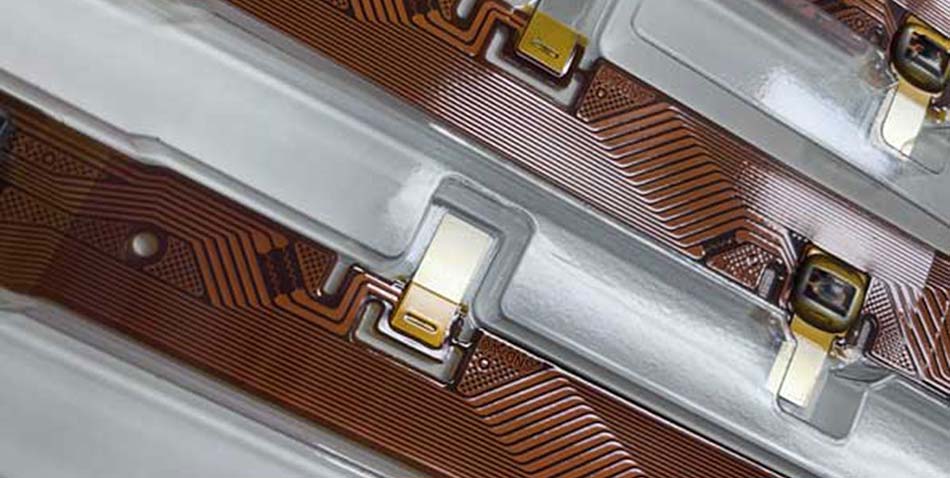
- Requirement:IP67 protection, EO sterilization compatibility, compliance with GB 9706.1 medical electrical safety.
- Solution:Functional zone isolation (power, drive, sensing, control separated) + localized silicone potting on drive area + waterproof O-rings on connectors + EMC shielding design.
- Result:Passed YY 0505 EMC testing, radiated emission reduced by 12 dBμV/m, IP67 test with no leakage, sterilization compatibility verified.
IV. Medical PCBA IP67 Design Regulatory Compliance Checklist (with References)
All medical PCBA designs must comply with the following regulations. TORTAI Technologies’ fully traceable system ensures compliance:
- Good Manufacturing Practice for Medical Devices (NMPA, 2021 Edition)
- GB 9706.1-2020 — Medical Electrical Equipment — Part 1: General Requirements for Basic Safety and Essential Performance
- YY 0505-2012 — Medical Electrical Equipment — Electromagnetic Compatibility Requirements
- ISO 13485:2016 — Medical Devices — Quality Management Systems
- ISO 10993-1:2018 — Biological Evaluation of Medical Devices
- IEC 60529:2013 — Degrees of Protection Provided by Enclosures (IP Code)
- IPC-CC-830 — Qualification and Performance of Electrical Insulating Compound for Printed Board Assemblies
V. FAQ
Q1: What is the core difference between IP67 and IP68?
A: IP67 is temporary immersion (1 m / 30 min), while IP68 is continuous immersion (depth defined by manufacturer, typically ≥1.5 m). For medical PCBA with no requirement for prolonged submersion, IP67 is sufficient.
Q2: Which is better for medical PCBA — potting or conformal coating?
A: Core areas (such as sensors, power modules) should be potted for higher protection; non-core areas can use conformal coating to facilitate rework. TORTAI Technologies adopts a combination of “localized potting + overall coating” to balance protection and repairability.
Q3: What tests are required for medical PCBA waterproofing?
A: Must include IP67 immersion test, 1000-hour damp heat test, 72-hour salt spray test, and adhesion test. TORTAI Technologies provides full test reports.
Q4: What metrics can TORTAI Technologies’ IP67 medical PCBA achieve?
A: Bond strength ≥15 MPa in potted areas, coating adhesion >7 N/cm, pad oxidation rate ≤0.5% over 2 years in 90% RH, and 100% IP67 test pass rate.
Q5: How much additional cost does waterproof design add to medical PCBA?
A: Conformal coating adds 10–20% cost; potting adds 30–50%, but field failure rates are reduced by over 90%, resulting in lower total cost of ownership.
Q6: Does waterproof design affect PCBA heat dissipation?
A: Thick coatings (>150 μm) can impact heat dissipation. TORTAI Technologies uses thermal simulation to optimize copper distribution and combines localized potting with thermal design to keep junction temperature ≤85°C.
Conclusion
IP67 design for medical PCBA is a synergistic effort of materials, processes, and regulatory compliance. TORTAI Technologies operates a 4,000 m² modern facility with 4 fully automated high-speed SMT lines, a Class 10,000 cleanroom, and certifications including ISO 9001, ISO 13485, and IATF 16949. We manufacture to IPC-A-610J Class III standards and utilize a full MES lifecycle traceability system.
Leveraging hands-on experience in medical-grade material selection, potting process optimization, and IP67 testing and validation, TORTAI Technologies supports clients from the design stage with DFM reviews and delivers end-to-end services — from material qualification to compliance testing — ensuring that medical PCBA meets IP67 protection requirements and global regulatory access.