


During PCBA design and manufacturing, thermal management directly impacts long-term reliability and performance boundaries. A common debate in project reviews is whether to use a heat sink to enhance convective cooling or to apply thermal adhesive to improve interfacial heat transfer. An incorrect choice can lead to excessive junction temperatures, accelerated device aging, or even batch failures.
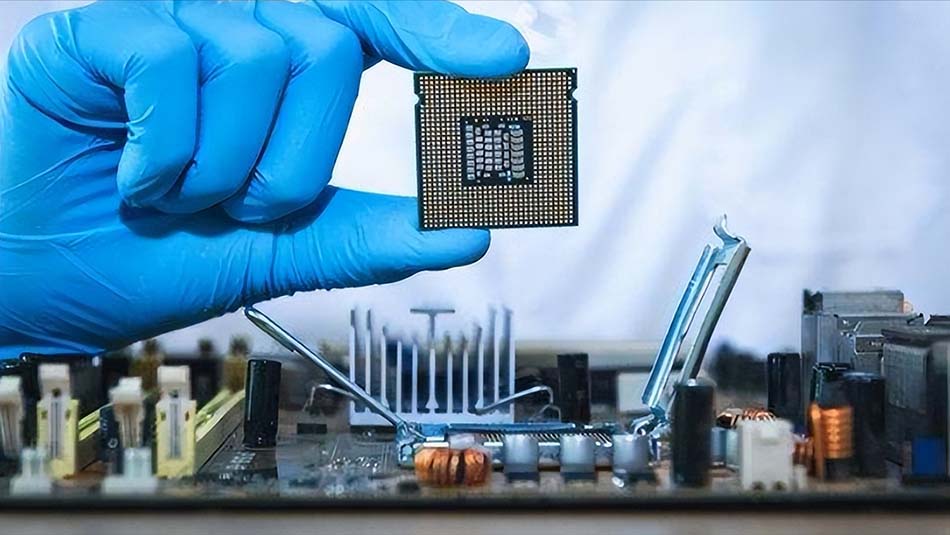
1、Heat Source Distribution and Heat Path Analysis on PCBA
The primary heat sources on a PCBA are concentrated in power devices, power management units, and high-speed processing chips. Under continuous load or high ambient temperatures, device junction temperatures (Tj) rise rapidly. After PCBA assembly, solder joints, copper layers, and dielectric materials collectively form the heat conduction path. Any design deficiency—such as insufficient copper thickness or missing thermal vias—can create localized hot spots.
2、Heat Sinks: An Engineered Approach to Enhanced Convective Cooling
Heat sinks use highly thermally conductive metals (aluminum, copper) to quickly spread heat from a device over a larger surface area, releasing it via natural or forced convection. They are suitable for applications with high power density, sufficient structural height, and controllable airflow. Their advantages include quantifiable thermal resistance, stable convective boundaries, and highly predictable temperature rise. However, the interfacial thermal resistance (TIM layer) between the heat sink and the device significantly affects performance.
3、Thermal Adhesive: A Gap-Filling Strategy to Minimize Interfacial Resistance
The core value of thermal adhesive lies in its ability to fill microscopic gaps between a device and its housing or heatsink structure, thereby reducing contact resistance. In space-constrained, complex, or curved PCBA assemblies, thermal adhesive enables conformal heat transfer. Its performance depends on thermal conductivity (λ), bond line thickness (BLT), and curing process. During PCBA manufacturing, strict control over dispensing volume, curing profile, and aging characteristics is required to ensure consistency.
4、Differences in Process Compatibility
Heat sink solution:Adds assembly steps (press-fitting, screw attachment, reflow soldering, etc.), imposes tighter tolerances on component placement and mechanical stress, and affects production cycle time.
Thermal adhesive solution:Relies on dispensing accuracy and stable curing parameters. Requires evaluation of adhesive bleed-out, outgassing, and long-term pump-out effects under thermal cycling. Demands tighter process control windows.
5、Heat Path Integrity: The Design Principle That Comes Before Material Selection
Comparing heat sinks and thermal adhesives in isolation often overlooks the underlying heat path design. Copper area, density of thermal vias, and the soldering integrity of exposed pads (thermal pads) together determine whether heat can be effectively extracted. If the PCB itself lacks sufficient thermal spreading capability (e.g., no thermally conductive dielectric or metal-core substrate), even an oversized heat sink cannot resolve localized hot spots.
6、Lifecycle Cost and Serviceability Assessment
Heat sink:Lower initial material cost, but adds assembly time and mechanical complexity. Easy to remove during rework and generally reusable.
Thermal adhesive:Higher unit cost, but can simplify mechanical fastening structures. Over long-term operation, it may suffer from thermal aging, cracking, or pump-out effects, leading to increased thermal resistance. Rework is difficult. Maintenance strategy and expected service life must be evaluated before PCBA manufacturing.
7、Selection Logic: Back to Application Scenarios and Thermal Simulation
Continuous high load, wide temperature swings, and forced/available airflow:Prioritize a heat sink solution, combined with reliable clamping and a high-performance TIM.
Thin, sealed, vibration-prone, or space-limited products:Thermal adhesive is often more flexible. Where needed, combine it with a local heat sink in a hybrid approach.
Best practice:Use thermal simulation (e.g., FEA) to analyze heat flux density and junction temperature distribution. Evaluate interface resistance, assembly tolerances, and reliability metrics holistically—rather than comparing materials in isolation.
If your PCBA passes thermal limits during prototyping but shows fluctuations in production or real-world testing, it often indicates that the thermal management solution has not yet been properly matched to the actual application environment. Contact us to start from PCBA manufacturing processes, structural constraints, and thermal simulation—we will help you select and stabilize the right cooling solution.