


In the perilous leap from laboratory prototype to stable mass production, First Article Inspection (FAI) is the safety net that ensures nothing goes wrong, and the first beam of light illuminating all subsequent production paths.
In 2025, a startup focused on portable medical monitoring devices, after a lengthy R&D phase, finally advanced its first product to the New Product Introduction (NPI) stage. However, confident based on data from the first 50 PCBA samples from trial production without rigorous FAI, they launched small-batch production of several hundred units. The result was a batch-related issue of cold solder joints on BGA components, triggered by an undetected solder mask thickness deviation caused by a subtle process adjustment at the PCB supplier. This led to a product recall, direct financial losses exceeding one million, and severe damage to brand reputation. This painful lesson profoundly reveals that in the NPI process, a rigorous, systematic FAI is by no means a dispensable formality, but rather a critical gatekeeper determining the success or failure of the project.
First Article Inspection, or FAI, is a comprehensive and detailed inspection and verification performed on the first articles (typically 1-3 units) of a product before the start of batch production. Its core purpose is to confirm that the production process—including personnel, equipment, materials, methods, and environment—can consistently and stably produce items that meet all design specifications and customer requirements. In the NPI phase, which transforms uncertainty into certainty, the importance of FAI cannot be overstated. It is not only the starting point of quality control but also a bulwark for risk prevention, a key lever for cost savings, and a cornerstone of customer trust.

1、FAI: The Risk “Circuit Breaker” and System Validator in the NPI Process
The essence of the NPI process is transforming a designed “theoretical product” into a “physical product” that can be manufactured stably. This process is full of variables and risks: Do materials from different suppliers exactly match the BOM? Does the stencil aperture design perfectly match the pads? Can the pick-and-place machine program accurately position every 01005 component? Is the reflow oven temperature profile optimal for all types of solder joints? FAI exists to answer these questions systematically.
The primary role of FAI is to act as a “circuit breaker” for the production process. By conducting the most comprehensive inspection at the earliest possible point, it prevents batch non-conformities, rework, or scrap caused by an undetected systemic defect. For instance, through FAI, systemic issues such as severe tooling wear, incorrect installation positioning, degraded measurement instrument accuracy, misreading drawings, or incorrect material feeding/formulation can be identified early. This pre-control is a crucial method for in-process quality control, preventing the escalation of quality issues and reducing costs associated with production stoppages and repairs.
More importantly, FAI is a comprehensive validation of the entire production system. It inspects not just the product itself, but also verifies whether the six (Man, Machine, Material, Method, Measurement, and Environment) operate harmoniously and effectively during their first combined run. A complete FAI report is, in essence, an authoritative certificate declaring that the “production line is ready for batch production.” It ensures the accuracy of the manufacturing process, verifies that equipment is functioning correctly, and confirms that produced parts conform to design specifications and requirements.

2、Beyond “Inspection”: The Multidimensional Value of FAI in NPI
The value of First Article Inspection extends far beyond merely finding defects. In the context of NPI, it is a critical activity that creates multiple layers of value.
- Foundation of Quality and Compliance: For industries under strict regulation such as medical devices and automotive electronics, FAI is a mandatory step to meet regulatory and standard requirements. It ensures product conformity to various standards and specifications, serving as a vital quality assurance measure. The complete, traceable inspection records generated through FAI are not only required by internal quality systems but also key evidence for customer audits and regulatory reviews. It enhances the transparency of the production process, allowing managers to better control it.
- Key Lever for Cost Control: “Quality is free, but only if you do it right the first time.” This adage is particularly relevant in the NPI stage. The cost invested in FAI is minuscule compared to the costs of batch failures it can prevent. By identifying problems early and enabling faster resolution, FAI significantly improves production efficiency, avoids large-scale recalls and major losses, thereby achieving substantial long-term cost savings. It is an economical choice for reducing various risks in the production process and increasing the probability of project success.
- Catalyst for Supply Chain Collaboration and Trust: The NPI phase often involves new suppliers or new materials. FAI provides an objective, neutral “acceptance platform” for both manufacturer and supplier. By jointly inspecting the first article against drawings and standards, ambiguities in materials or processes can be identified and resolved early, establishing a fact-based collaborative relationship. This helps build and improve the partnership between supplier and manufacturer, ensures stable component quality, and avoids subsequent blame-shifting and delays in production.
- Source of Data for Continuous Improvement: A detailed FAI report is not just a verdict of “pass/fail” but a valuable source of process data. In-depth analysis of FAI results can help manufacturers identify opportunities for improvement in the production process and continuously optimize workflows. This data can be fed back to the design team (for DFM improvements), the process team (for parameter optimization), and the quality team (for control plan updates), forming a closed loop from manufacturing back to design and promoting continuous improvement.

3、Executing an Effective FAI: Key Elements and Best Practices
A perfunctory FAI is more dangerous than not performing one at all, as it creates a false sense of security. To ensure the effectiveness of FAI, the following core elements must be addressed:
- Clear Inspection Timing and Scope: FAI is not performed just once at the start of NPI. By definition, it must be repeated after any “process change” that could affect product quality. This includes, but is not limited to: the start of each work shift; change of operator; replacement or adjustment of equipment/tooling; changes to technical conditions, methods, or process parameters; and after using new or substitute materials. During NPI, an appropriate level of FAI should be executed at each key milestone, from prototype build to pilot production (PVT) and into formal mass production (MP).
- Rigorous “Three-Check” Process: First Article Inspection should follow a mature and reliable “three-check” system: self-inspection by the operator, mutual inspection by the team leader or colleague, and specialized inspection by a dedicated inspector. The product submitted for inspection must first undergo “self-inspection” by the operator, then “mutual inspection” by the team leader or colleague, and finally a ‘specialized inspection’ by the inspector. Only after confirmation of conformity can subsequent products continue to be processed. The approved first article should be marked with a specified identifier and retained as a baseline for comparison in subsequent production.
- Comprehensive and Focused Inspection Items FAI inspections must be exhaustive, covering all aspects from documentation to physical components. Key items should include: verification of drawing numbers against work orders; confirmation that materials, blanks, or semi-finished products match assigned tasks; compliance of surface treatments and mounting positions for materials and blanks; adherence of formulation ingredients to specified requirements; and finally, assessment of whether the actual quality characteristics of the first processed product meet the requirements stipulated in drawings or technical documentation. In the context of NPI for PCBA, this specifically entails verifying BOM consistency, inspecting pad-to-component package alignment, measuring critical dimensions, conducting fundamental functional testing, and performing preliminary reliability assessments.
- Standardized Environment and Tools: The reliability of inspection results highly depends on the inspection environment and tools. FAI must be conducted under controlled environmental conditions using calibrated measurement equipment and tools with appropriate precision. For high-density PCBAs, this may require using 2.5D or even 3D AOI and X-Ray to inspect hidden solder joints, and using high-precision bridges to measure values of tiny passive components. Environmental conditions and specific test conditions can also enhance product reliability and stability by simulating intended use scenarios.
- Structured Documentation and Closed-Loop: FAI must produce a formal, structured report containing all inspection data and conclusions. This report needs to record sample information, inspection basis, inspection items, measured data, acceptance criteria, conclusions, and detailed descriptions of any non-conformities. All first articles must be retained as samples for subsequent product comparison to monitor process changes. For any non-conformity, root cause analysis must be initiated, and the implementation of corrective and preventive actions (CAPA) must be tracked until the issue is closed, forming a complete quality closed loop.
4、Integrating FAI Thinking into NPI Culture: From Passive Inspection to Active Assurance
To truly make FAI the “guardian” of the NPI process, it must be elevated from an isolated activity to a pervasive mindset and culture.
This means the project team (including R&D, Process, Quality, and Production) needs to jointly consider FAI requirements early in the NPI process—even during the design phase. For example, during Design for Manufacturability (DFM) reviews, considerations should include how to design features that are easier to inspect, how to provide test points, and how to select materials that facilitate measurement and traceability. This forward-thinking approach makes FAI execution smoother and more effective.
Companies should invest in the digitization and automation of FAI. Utilizing MES (Manufacturing Execution Systems) to automatically trigger FAI workflows, record inspection data, and correlate relevant process parameters (like reflow profiles) can significantly improve FAI efficiency and data usability. Through data analysis, root causes of issues such as soldering defects or component tombstoning can be quickly identified, leading to process optimization.
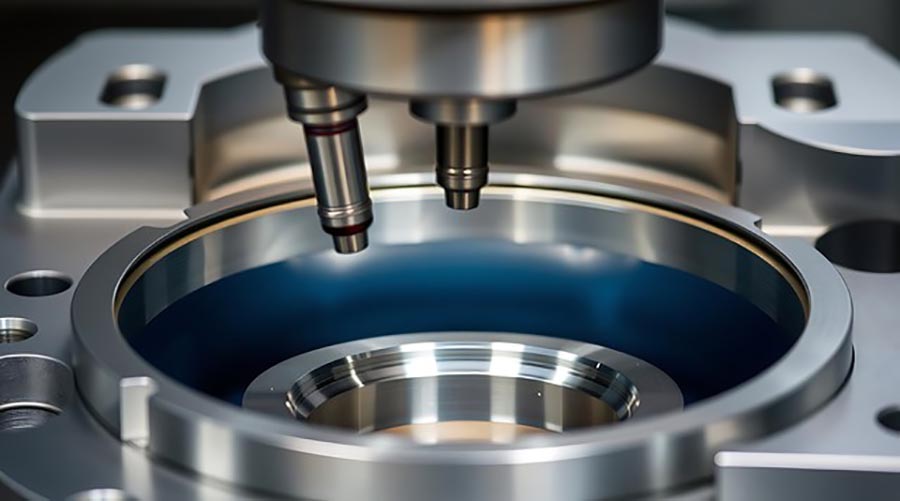
Ultimately, the top management’s commitment to FAI is pivotal to embedding this culture. It must be unequivocally established that ‘products failing initial inspection shall not be accepted,’ establishing this as an inviolable quality red line. When every team member comprehends that FAI is not about ‘causing trouble’ but rather ‘ensuring success,’ it will evolve from a mandated task into a proactively sought safeguard.
In the uncertain journey of new product introduction, First Article Inspection (FAI) is the first searchlight turned on. It may not illuminate the entire path, but it ensures our first step is firm and correct. Through its initial, comprehensive scrutiny, it nips potential risks in the bud, paving the way for subsequent batch production. In today’s fiercely competitive landscape with stringent quality demands, the short-term efficiency gains from skipping FAI are insignificant compared to the catastrophic consequences it can trigger. An excellent NPI process invariably places a rigorous, systematic, and in-depth FAI at its heart.
Tortai Technologies possesses extensive experience in precision electronics manufacturing and NPI. We deeply understand the decisive significance of First Article Inspection for project success. Our NPI process incorporates a rigorous FAI system, from cross-functional team formation and standardized inspection checklist development to the application of high-precision inspection equipment and digital report generation, ensuring that every new product introduction begins with a perfect “first article.” We believe an excellent start is half the battle won. Tortai Technologies is committed to being your trusted manufacturing partner with our professional NPI management and quality assurance capabilities, working together to steadily and reliably transform innovative concepts into market success.