


In the PCBA processing industry, using alternative components (second sources) is a routine operation to address supply chain fluctuations, yet it is also one of the highest-risk activities. A substitute component that hasn’t undergone rigorous authorization and validation can, at best, cause functional anomalies and, at worst, result in mass scrap.
In electronics manufacturing, this change management is known as PCN (Product Change Notification). According to industry definitions, PCN encompasses all changes related to raw materials, production processes, equipment, and functional performance. For PCBA contract manufacturers, establishing a rigorous “customer-authorized PCN process” is not only a quality management requirement, but also the cornerstone of earning customer trust.
Drawing on industry best practices, this article provides an in-depth breakdown of the complete substitute component authorization process in PCBA manufacturing, helping enterprises build a comprehensive system from change request to closed-loop verification.
1、Core Scope of PCN: When Is Customer Authorization Required?
Not all material adjustments require the full PCN process, but written customer authorization must be obtained for the following core changes:
- End-of-Life (EOL):The original model is discontinued or upgraded—this is the most common trigger for substitution.
- Raw Material/Brand Change:Even for the same model number, if the primary raw material supplier, place of origin, or brand changes, this falls under the PCN scope.
- Performance and Function Changes:Variations in electrical, mechanical, or thermal properties, or functional upgrades and defect corrections.
- Process and Production Line Changes:Addition or removal of production equipment, adjustments to process flows, or relocation of production lines.
- Appearance and Dimension Changes:** Alterations in form factor, dimensions, tolerances, color, or marking.
- Core Logic:A PCN process must be triggered whenever a change could potentially affect a product’s function, performance, reliability, or appearance, and involves the “material” itself.
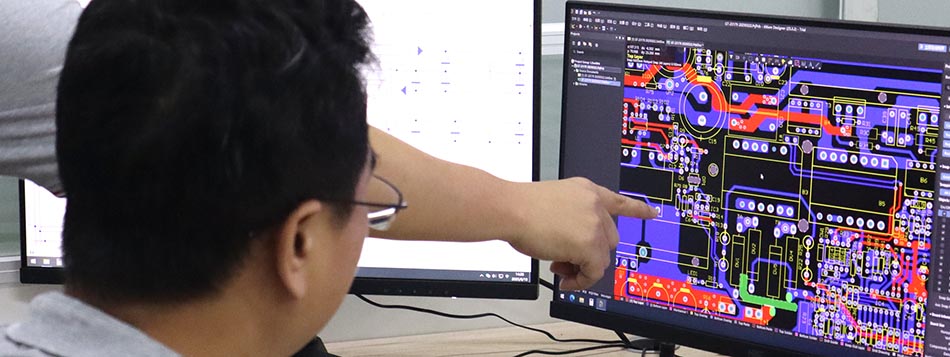
2、Detailed Breakdown of the Full PCN Process: Seven Steps to Closed-Loop Management
Step 1: Change Request and Preliminary Communication (Supplier Proposal)
When a PCBA contract manufacturer (or upstream supplier) plans to introduce a substitute component, it must first submit a formal PCN application to the customer’s procurement or project department.
- Submission Content:Must include a “New Material Trial Run Tracking Sheet,” clearly specifying the component name, specification/model, quantity, supplier name, original material code being replaced, desired completion date, and reason for the change.
- Lead Time Requirements:Strict notification timelines must be observed based on the severity of the change. For example, an EOL notification requires 12 months’ advance notice; a functional/performance upgrade requires 6 months; and an appearance or process change requires 3 months.
- Attachment Preparation:Must include a detailed description of the change, an impact analysis, the supplier’s qualification data report, and samples of the changed component.
Step 2: Cross-Functional Review
Upon receiving the PCN application, the customer (or the contract manufacturer internally) must organize a cross-departmental review, which is a critical node for risk control.
- Procurement Department:Assesses the change’s impact on cost, and verifies the plan for handling in-transit orders and existing inventory.
- R&D/Hardware Engineers:Review the new component’s datasheet, evaluating electrical performance, structural dimensions, and connector compatibility. It is especially critical to confirm whether the substitute’s package (e.g., DFN, SOT) is compatible with the PCB design, avoiding pin-to-pin incompatibility issues.
- Quality/QA Department:Evaluates the potential impact on product reliability and determines if renewed environmental (RoHS/REACH) certification is required.
- Production/PMC Department:Assesses the new material’s impact on production efficiency and equipment compatibility (e.g., SMT pick-and-place nozzle type).
Step 3: Technical Verification of the Substitute Component
This is the most time-consuming and critical stage of the PCN process. According to standards, the substitute testing cycle requires at least 15 days, covering functional, performance, and reliability tests.
(1) Document Review and Parameter Benchmarking
- Parameter Comparison:Confirm that critical parameters (e.g., voltage, current, input range) match exactly; key parameters (e.g., accuracy, withstand voltage) may have a ±10% deviation but must be verified through simulation.
- Package and Dimensions:Confirm physical dimensions, pin definitions, and pad compatibility. For SMD parts, tape-and-reel packaging is mandatory, and the packaging pitch must be consistent with the original material to avoid adjusting the SMT program.
(2) Sample Testing and Reliability Trials
- Basic Testing:Check appearance and dimensions, and conduct solderability tests (e.g., comparing manual soldering and SMT soldering to ensure consistent thermal characteristics).
- Environmental Testing:Perform temperature cycling, thermal shock, and drop tests to verify stability under extreme conditions.
- Functional Verification:Solder the new component onto a PCB and conduct In-Circuit Test (ICT), Functional Test (FCT), and even high-temperature/high-humidity (85°C/85%RH) burn-in testing.
(3) Pilot Run
- Quantity Requirement:A pilot run of 500–1,000 pcs is recommended. A quantity that is too small cannot reflect real mass production conditions, as the supplier may have hand-picked exceptionally good samples.
- Process Monitoring:An engineer must follow the entire process, recording data such as placement accuracy, rejection rate, and soldering yield. The contract manufacturer’s IQC must implement tightened inspection, or even conduct X-ray inspection or decapsulation sampling to prevent the use of refurbished or off-spec components.
- First Article Confirmation:Produce a first article (first 5 pieces) before production, which can only proceed to mass production after being signed off and sealed by the customer.
Step 4: ECN (Engineering Change Notice) Issuance and BOM Update
After validation passes, an ECN (Engineering Change Notice) must be formally issued to implement the change.
- Cut-Off Point Control:Clearly define the switchover point between old and new materials (Cut-off Point), and handle old material inventory (e.g., consume-then-switch, or scrap).
- BOM Update:The R&D/technical department updates the material specification, and the procurement department updates the BOM to ensure accurate material descriptions and substitution relationships in the system.
- Document Synchronization:Update production documents such as PCBA assembly drawings, coordinate files, and test fixtures.
Step 5: Final Customer Authorization
This is the “life-or-death” clause at the legal and commercial level. Before the PCN is formally executed, written (or system-based) confirmation from the customer must be obtained.
- Authorization Format:This can be confirmed via email or by using cross-enterprise authorization features on platforms, authorizing the factory for a specific product PID and clearly defining the authorization scope (development, procurement, or ordering).
- Signed Documentation:The supplier must output an “ECN Change Confirmation Form,” including sample dimension measurement data and trial assembly conclusions, delivered with the first shipment of materials for the customer’s IQC inspection.
- Rejection and Conditional Acceptance:If the customer assesses the risk as too great, they have the right to reject the change. In this case, the supplier must provide alternative solutions or maintain the original material supply.
Step 6: Mass Production Execution and Traceability
After authorization is granted, the mass production phase begins, focusing on traceability and consistency.
- Material Traceability:Utilize a WMS+MES system to scan the material Reel ID, enabling full-lifecycle traceability from receiving to line-side usage. Ensure that the same batch of material is used for production to prevent quality fluctuations caused by material variation.
- Mistake-Proofing System:By scanning the BOM barcode and material Reel ID, the system automatically verifies that the “material matches the order.”
- SPC (Statistical Process Control):Analyze quality data in real time to identify trending issues (e.g., an increase in defect rates during a certain period due to changes in the new material’s solder paste viscosity).
Step 7: Closure and Ledger Management
- PCN Ledger:The supplier must establish a PCN receiving ledger and report back to the customer monthly. The customer will periodically extract ECN lists for reconciliation.
- On-Site Audit:For critical PCNs (e.g., those involving molding parameters, coating conditions, or key equipment changes), the customer may organize a TQC (Technical Quality) team to follow up on the supplier’s line for closed-loop verification, confirming whether the current production conditions (5M1E: Man, Machine, Material, Method, Measurement, Environment) are consistent with the approved documentation.
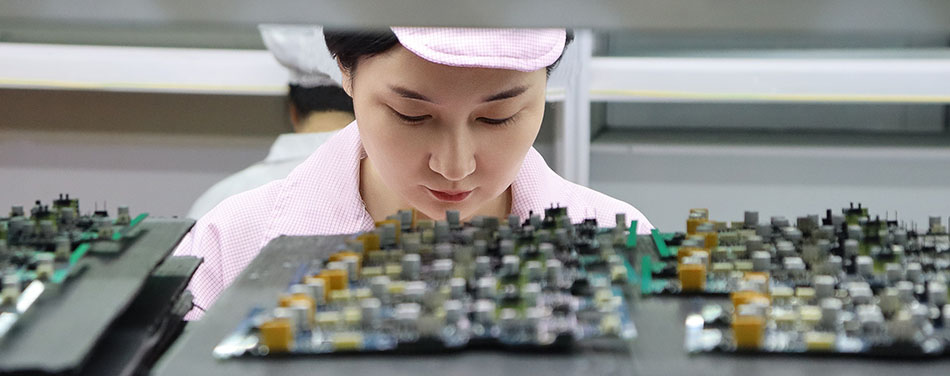
3、Pitfall Avoidance Guide in the PCN Process
(1) Beware of “Parameter Traps”
Many substitute components appear identical on datasheets but perform vastly differently under real-world conditions. For example, a diode might have the same nominal forward voltage (Vf) but exhibit a huge difference in leakage current (Ir) at high temperatures, leading to product failure during burn-in. Therefore, don’t just look at the datasheet; look at actual measured data.
(2) Strictly Prohibit “Unauthorized Switches”
In PCBA processing, it is strictly forbidden for a contract manufacturer to switch materials without authorization due to shortages or cost concerns. Once discovered, this can result in severe “one-vote veto” penalties and even loss of supplier qualification.
(3) Pay Attention to “Secondary Authorization”
In complex supply chains, a factory may need to transfer an authorized product to an upstream factory for production. In such cases, the platform’s “allow secondary authorization” function must be used to ensure a clear chain of responsibility, preventing intellectual property leakage and loss of production control.
4、Trends in PCN Management in the Digital Era
With the advancement of Industry 4.0, PCN management is evolving from paper-based documents to digital systems.
- Cross-Enterprise Collaboration Platforms:Support real-time authorization and data synchronization between brand owners and factories, ensuring data isolation and transparency between “my product” and “the customer’s product.”
- ECN Management Systems:Automatically generate change impact reports, including PCB revision costs, NPI cycle times, and test verification expenses, making decision-making transparent.
- Data Transparency:Customers can view the PCN execution status, pilot production yields, and inventory consumption in real time through a portal, eliminating information asymmetry.
Conclusion: PCN Is Not Just a Process, but a Spirit of Contract
In today’s increasingly complex electronics manufacturing supply chain, the substitute component authorization (PCN) process in PCBA processing has long transcended pure technical scope; it is a contract of trust between enterprises. A rigorous PCN process effectively prevents a “race to the bottom,” ensuring that products maintain high reliability and consistency even under extreme supply chain bottlenecks.
In the practice of helping clients build rigorous PCN management systems, Tortai Technologies Co., Ltd. has been deeply engaged in high-reliability PCBA/OEM/ODM/EMS for over a decade. With a 4,000m² modern facility, four fully automated high-speed SMT lines, two DIP lines, and ICT/FCT test lines, it holds ISO9001:2015, ISO13485, and IATF16949 certifications, executes the IPC-A-610J Class III standard, and operates an MES traceability system. Backed by practical experience in component substitute validation (such as Schottky diode pin-to-pin compatibility testing), supply chain risk early-warning (red/yellow light mechanism), and automotive-grade material management (AEC-Q certification support), Tortai Technologies can assist customers in executing a strict PCN process—from document review and pilot production to mass production traceability—ensuring that every substitute component undergoes “four-step verification,” helping customers build a secure and resilient localized supply chain system while safeguarding product quality.