


Over more than a decade serving medical and aviation clients across Europe and North America, we have developed a deep understanding of a common industry concern: the pursuit of ultimate quality is, at its core, a commitment to end-user safety and product reputation. However, we have repeatedly observed that when specifications demand medical/military-grade compliance for everything—from core processors to housing screws, and from critical sensors to indicator light labels—the result is often misallocated rigor and wasted resources.
This “one-size-fits-all” high-standard strategy appears rigorous on the surface but actually incurs three hidden costs: over 30% unnecessary cost inflation, reduced supply chain resilience, and diluted management focus on core risk points. Critical nodes that truly require strict protection may end up overlooked amid a sea of uniform high-level requirements.

1、The Root Cause: High Standards “Flattened” Across the Board
The core of quality management for high-reliability equipment has never been “pushing everything to the highest grade” but rather grading by functional criticality. The logic is simple: What are the consequences if a component fails? The more severe the consequences, the higher the requirement.
In practice, however, this logic is often oversimplified. Large enterprises accumulate procurement specifications over decades; if a single critical component fails, the standard for the entire category is raised. After years of such stacking, specifications become bloated and increasingly disconnected from the actual functional importance of each component. The end result? The label on an indicator light and the core control module are held to the same supplier qualification requirements.
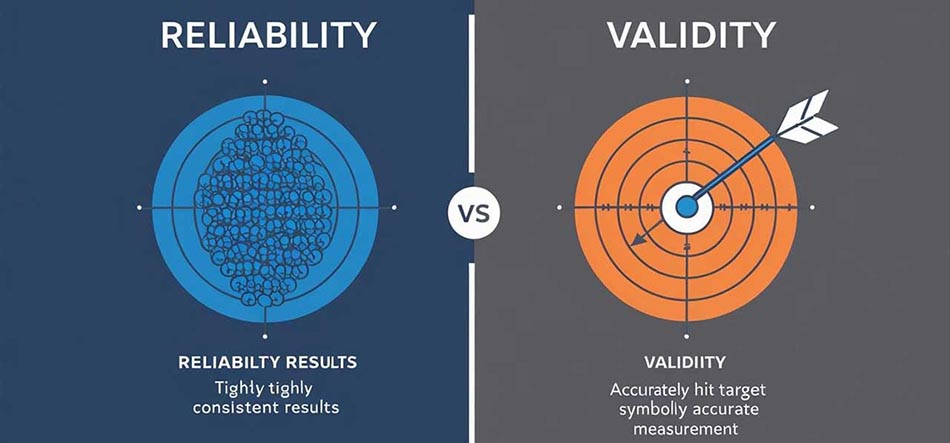
2、Industry Standards Already Support Tiered Management
A common misconception is that all components in high-reliability equipment must meet the highest standards. In fact, widely adopted industry standards have long established clear grading logic:
2.1 IPC Three-Class System: Board-Level Grading, Component-Level Matching
The IPC (Association Connecting Electronics Industries) standards inherently support tiered management. Class 3 is defined for the entire assembly, not every individual component inside it:
| IPC Class | Applicable Scenarios | Reliability Requirements | Adaptation Rules for Non-Critical Components |
| Class 1 | Consumer electronics | Basic functionality, short lifespan | Execute corresponding grade |
| Class 2 | Industrial/telecom equipment | Extended lifespan, moderate reliability | Reasonable selection for most industrial equipment |
| Class 3 | Medical/military/aviation equipment | Highest reliability, no performance degradation allowed | Non-critical path components can be downgraded to Class 2 if FMEA proves failure does not affect safety functions |
2.2 Quantifiable Differences in Component Quality Grades
According to GJB 299 “Reliability Prediction Handbook for Electronic Equipment”, the failure rate of components can vary by up to two orders of magnitude across quality grades: the quality coefficient of domestic Grade I (aerospace high-reliability) is only 1% of commercial grade, and the failure rate of imported Grade A1 (space-grade) is three orders of magnitude lower than commercial grade. However, high-grade components can cost 10–100 times more than their commercial-grade counterparts. Blindly selecting high-grade components for non-critical parts leads to unnecessary cost waste.
2.3 Explicit Grading Requirements for Safety-Critical Systems
Life-critical systems require a failure rate of less than 10⁻¹/h, with strict control via FMEA (Failure Mode and Effects Analysis) and fault tree analysis. Non-critical components whose failure only affects user experience—not safety—do not need to meet the highest grade requirements.
3、The Three Hidden Costs of “Full Highest Standard”
Many of our clients have stumbled into these pitfalls due to one-size-fits-all standards:
- Inflated costs: Non-critical components forced to meet highest-level certification requirements directly drive up material and manufacturing costs. This portion of cost cannot be compressed in competitive bidding, ultimately eroding market competitiveness.
- Brittle supply chains: Low-volume, high-spec components often have only a handful of qualified suppliers. If one faces lead time issues or discontinuation, the entire production line stalls. Supply chain resilience comes from being strict where necessary and flexible where possible.
- Diluted risk focus: When all components are labeled top priority, truly critical components lose their “special protection” status. Engineers and suppliers’ attention is spread evenly, leading to reduced control quality for core risk points.

4、The Right Approach: Build a Functional Criticality Matrix
A well-designed high-reliability product should complete the following grading work during the design phase, allocating limited resources and attention precisely where they are needed:
| Criticality Grade | Definition | Typical Component Examples | Recommended Standards | Basis |
| Safety-Critical | Failure directly endangers personal safety or causes catastrophic system failure | Medical device core sensors, motor drive protection circuits, aviation attitude calculation modules | Highest grade (GJB/MIL/IPC Class 3), full certification + strict traceability | GJB 299, ARP4754A DAL A requirements |
| Mission-Critical | Failure causes system unavailability but does not directly threaten life | Main control MCU, communication modules, power management chips | High-reliability industrial grade (AEC-Q100/IPC Class 2), complete supply chain documentation | ISO 26262 ASIL C/D requirements |
| Performance-Affecting | Failure degrades performance but system remains operational | Filter capacitors, signal conditioning circuits | Industrial grade standards, certified alternate sources acceptable | General specifications for industrial-grade components |
| Non-Critical | Failure does not affect core functionality | Indicator lights, housing labels, mounting screws | General industrial standards, relaxed supplier qualification requirements | Standardization and interchangeability design principles |
This matrix is not about lowering standards—it is about rational resource allocation. Much like renovating a house: load-bearing walls require the highest-grade materials, but the hooks for decorative paintings do not need the same grade as load-bearing walls. That is true engineering rationality.
5、What We Can Do as Your EMS Manufacturing Partner
At TORTAI Electronics, a significant portion of our clients come from medical electronics, industrial control, and high-spec equipment sectors. We have observed that the most experienced engineering teams prioritize this criticality grading early in the design phase, rather than waiting until mass production quotes arrive to ask “why is this so expensive?”
We believe a truly valuable EMS partner should not simply “follow the spec sheet blindly.” During the DFM (Design for Manufacturability)/engineering evaluation phase, we can proactively help you:
- Identify specification requirements that exceed actual functional needs
- Optimize cost structures and supply chain flexibility without compromising reliability
This is not about reducing product quality—quite the opposite, it is about directing genuine quality investment where it matters most. We once assisted a medical client with early-stage grading optimization, achieving:
- 22% overall cost reductionwhile fully meeting medical certification reliability requirements
- 40% increase in alternative suppliersand 25% improvement in delivery stability
- 60% higher focus on core risk point managementand 35% reduction in mass production customer complaints
6、FAQ: Component Grading for High-Reliability Equipment
Q1: Must all components in high-reliability equipment use military/space-grade standards?
A: No. Electronic component grading systems clearly distinguish reliability requirements by application scenario: Military-grade components (compliant with MIL-STD-883) operate in a -55°C to 125°C temperature range, require strict screening and aging tests, and come at extremely high cost—only suitable for extreme environments like military and aerospace. For conventional high-reliability scenarios such as medical and industrial control, core non-extreme environment components can use industrial grade (operating temperature -40°C to 85°C, 2–5× commercial grade cost) or corresponding medical-grade standards. Blindly selecting full military-grade components leads to over 30% cost inflation and may cause issues with device size and power consumption.
Q2: Does IPC Class 3 assembly standard require all components to be manufactured to Class 3?
A: No. The IPC three-class system is defined for overall assembly reliability: Class 3 applies to medical, military, and aviation equipment with the highest reliability requirements, but only requires safety-critical path components to meet Class 3 standards. Non-critical path components can fully comply with Class 2 (industrial/telecom, moderate reliability, longer lifespan) standards as long as FMEA proves failure will not affect safety functions. This is a common industry engineering practice, not a reduction in quality.
Q3: How large are the reliability and cost differences between component grades?
A: Differences grow exponentially with higher grades, based on 2026 industry public data:
| Component Grade | Operating Temperature Range | Design Lifespan | Failure Rate (FIT) | Cost Multiplier (Commercial Grade = 1×) |
| Commercial | 0°C ~ +70°C | 1–3 years | 100–1000 | 1× |
| Industrial | -40°C ~ +85°C | 5–10 years | 10–100 | 2–5× |
| Automotive | -40°C ~ +125°C | 15+ years | Near zero failure | 5–20× |
| Aerospace | -55°C ~ +150°C | 10–20 years | Extremely low | 50–200× |
| Space | -55°C ~ +150°C+ | 20–30+ years | Absolute reliability | 200–1000× |
Q4: How to reasonably grade components for high-reliability equipment?
A: Refer to the functional criticality matrix and divide into four dimensions with matching standards:
- Safety-Critical: Failure directly endangers life or causes catastrophic failure (e.g., medical core sensors, aviation attitude modules) → Highest grade (GJB/MIL/IPC Class 3), full certification + traceability
- Mission-Critical: Failure causes system unavailability but no direct life threat (e.g., main MCU, communication modules) → High-reliability industrial grade (AEC-Q100/IPC Class 2), complete supply chain docs
- Performance-Affecting: Failure only degrades performance, system remains operational (e.g., filter capacitors, signal conditioning circuits) → Industrial grade standards, certified alternate sources acceptable
- Non-Critical: Failure does not affect core functionality (e.g., indicator lights, housing labels, mounting screws) → General industrial standards, relaxed supplier requirements
Q5: What are the practical drawbacks of “one-size-fits-all” highest standards?
A: Three main hidden costs:
- Inflated costs: Non-critical components with highest-level certification push up material and manufacturing costs, which cannot be compressed in competitive bidding, weakening market competitiveness
- Brittle supply chains: Low-volume high-spec components have few qualified suppliers; delivery delays or discontinuation stall entire production lines. Retaining multiple suppliers for non-critical components improves resilience
- Diluted risk: When all components are marked top priority, engineers and suppliers’ attention is spread evenly, leaving insufficient resources for core risk points and increasing systemic failure probability
Q6: Is it suitable to select all military-grade components for medical electronic equipment?
A: Usually not, due to the “military-grade paradox”: Military standards focus on extreme environment adaptability (wide temperature, shock, radiation resistance), while most medical equipment operates in controlled hospital environments, with core needs being signal integrity, electromagnetic compatibility, and long-term stability—not extreme environment tolerance. In 2022, an ICU monitor using full military-grade components met performance targets but cost 3× the price of conventional products, ultimately failing due to low market acceptance. Medical electronics are better served by a grading strategy: general devices use industrial to medical grade, critical treatment devices use full medical grade, and only field emergency devices should selectively adopt partial military-grade standards.
Q7: What grading optimization support can an EMS provider offer?
A: We can provide three types of support during the DFM/engineering evaluation phase:
- Assist in identifying specification requirements that exceed actual functional needs, avoiding invalid cost investment
- Cooperate to complete FMEA analysis, clarify criticality grades of each component, and establish a graded control list
- Optimize cost structure and supply chain flexibility without compromising reliability, such as replacing non-critical components with compliant alternate sources and adding alternative suppliers
Actual case studies show early grading optimization can help medical clients reduce costs by 22%, increase alternative suppliers by 40%, raise core risk point management focus by 60%, and lower mass production complaint rates by 35%.
Conclusion
High reliability has never meant “highest standards across the board.”
True reliability engineering is about precise risk identification, rational resource allocation, and uncompromising focus on critical nodes while maintaining flexibility on non-critical ones. For teams developing or iterating high-reliability products, establishing a clear component criticality grading system is a worthwhile early investment—it delivers far greater returns in subsequent mass production, supply chain management, and cost control.
Our goal is not to lower standards, but to apply the right standard to the right link, ensuring both product reliability and supply chain stability. If you are struggling with cost, lead time, or risk control for high-reliability products, Contact us—we can provide a free preliminary grading assessment.